

 English
 Español
 Русский
 العربية
 Français
 Deutsch
 Português
 Tiếng Việt
 ไทย
ไทย
 Bahasa Indonesia
 Türkçe
 Italiano





Choosing the right explosion-proof bridge crane is critical for ensuring safe lifting operations and preventing catastrophic accidents in flammable or explosive atmospheres. Before purchasing, you need to understand the specific hazard levels of your workspace, the required lifting capacity, and the applicable international safety standards to make an informed decision.
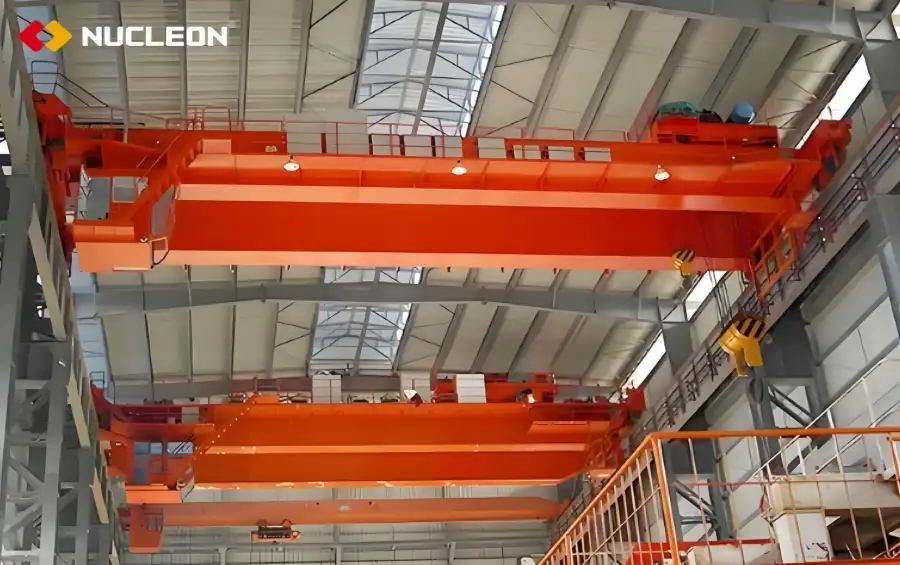
What is an explosion-proof bridge crane?
An explosion-proof bridge crane is specialized lifting equipment designed specifically for environments containing flammable gases, vapors, or dust. Unlike standard cranes, all its key components—including motors, electrical control systems, and hoisting mechanisms—are constructed with special safety features. These components are tightly sealed and made from anti-static or flameproof materials to completely eliminate potential ignition sources such as sparks or high surface temperatures, ensuring safe operation in hazardous areas.
Common types of explosion-proof bridge cranes
Nucleon offers a comprehensive range of explosion-proof solutions to meet diverse industrial needs. The primary types include:
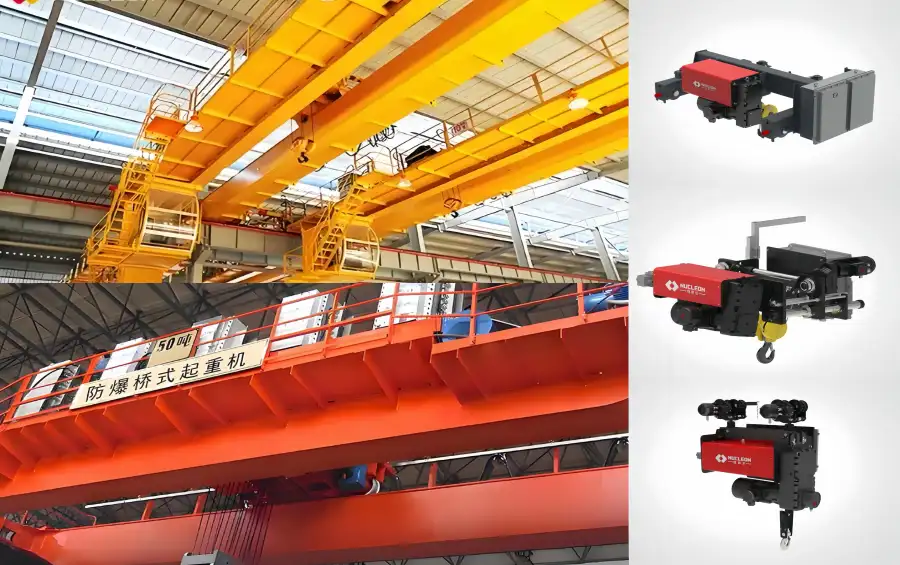
QB Type Explosion-proof Overhead Crane: Designed for environments with explosive gas mixtures (Zone 1 or Zone 2), available in capacities ranging from 5 to 100 tons.
Explosion-proof Electric Hoists:Modular and compact hoists that can be customized for single or double-girder cranes, with lifting capacities from 0.5 to 30 tons.
New Chinese Explosion-proof Hoists: Featuring an independent spatial rod support structure and "C" type hoisting device, optimized for low headroom and minimal blind areas.
Where is an explosion-proof bridge crane used?
These cranes are indispensable in industries where combustible materials are handled or processed. Common applications include:
Petroleum and natural gas refineries
Chemical and petrochemical plants
Pharmaceutical manufacturing facilities
Offshore platforms and shipbuilding yards
Coal mines and grain processing plants (dust explosion risks)
Paint shops and solvent storage areas
Key factors when choosing an explosion-proof bridge crane
Selecting the appropriate equipment requires careful evaluation of several technical parameters:
Explosion-proof Certification: Ensure the crane meets international standards like IECEx, ATEX, or GB3836. Common marks include Exd II BT4 (for gases like propane, gasoline) and Exd II CT4 (for hydrogen, acetylene).
Hazardous Zone Classification: Verify if your site is Zone 1 (explosive mixture likely to occur normally) or Zone 2 (explosive mixture occurs occasionally). Note that standard explosion-proof cranes are not suitable for Zone 0.
Lifting Capacity and Span: Match the crane's rated load (e.g., 5t to 100t) and span (e.g., 7.5m to 35m) to your actual lifting requirements.
Temperature Group: Check the ignition temperature group (T1 to T4) to ensure the crane's maximum surface temperature remains below the ignition point of the hazardous gas in your facility.
Explosion-proof bridge crane price factors
The cost of an explosion-proof bridge crane is generally higher than a standard crane due to stringent safety requirements. Key pricing factors include:
Certification Level: Cranes certified for IIC level gases (like hydrogen) or ATEX/IECEx standards cost more than those for IIB gases.
Customization & Modular Design: Specialized configurations, such as low headroom designs or customized control systems, will affect the price.
Control Options: Advanced features like wireless remote control, variable frequency drives, and intelligent anti-sway systems add to the overall cost.
Lifting Capacity & Span: Larger tonnage and wider spans naturally require more robust materials and larger explosion-proof motors.
What information is needed for quotation?
To provide an accurate and customized quotation, Nucleon requires the following details:
1.Required lifting capacity (tons) and lifting height (meters).
2.Span of the crane (meters).
3.Hazardous environment classification (Zone 1 or Zone 2) and specific gas/dust type.
4.Required explosion-proof mark (e.g., Exd II BT4, Exd II CT4).
5.Preferred control method (cabin, ground pendant, or wireless remote).
6.Working class/duty cycle (e.g., A3, A5, M5).
Frequently Asked Questions
Q: Can a standard crane be converted into an explosion-proof crane?
A: No. Explosion-proof cranes must be manufactured from the ground up using flameproof enclosures, anti-static materials, and specialized motors to comply with safety standards. Retrofitting is not safe or compliant.
Q: What is the difference between Exd II BT4 and Exd II CT4?
A: Exd II CT4 is a higher safety rating suitable for more dangerous gases like hydrogen and acetylene, whereas Exd II BT4 is suitable for less volatile gases like propane and gasoline.
Q: Does Nucleon provide international certifications for these cranes?
A: Yes, our explosion-proof hoists and cranes adhere to international standards including IECEx, ATEX, and TR CU, ensuring safe operation in explosive atmospheres worldwide.
Contact us
If you need a customized explosion-proof bridge crane solution, please send us your lifting capacity, span, lifting height, hazardous zone classification, and specific gas type. Nucleon's engineering team can help you choose the safest and most suitable model and provide a professional quotation.