

 English
 Español
 Русский
 العربية
 Français
 Deutsch
 Português
 Tiếng Việt
 ไทย
ไทย
 Bahasa Indonesia
 Türkçe
 Italiano





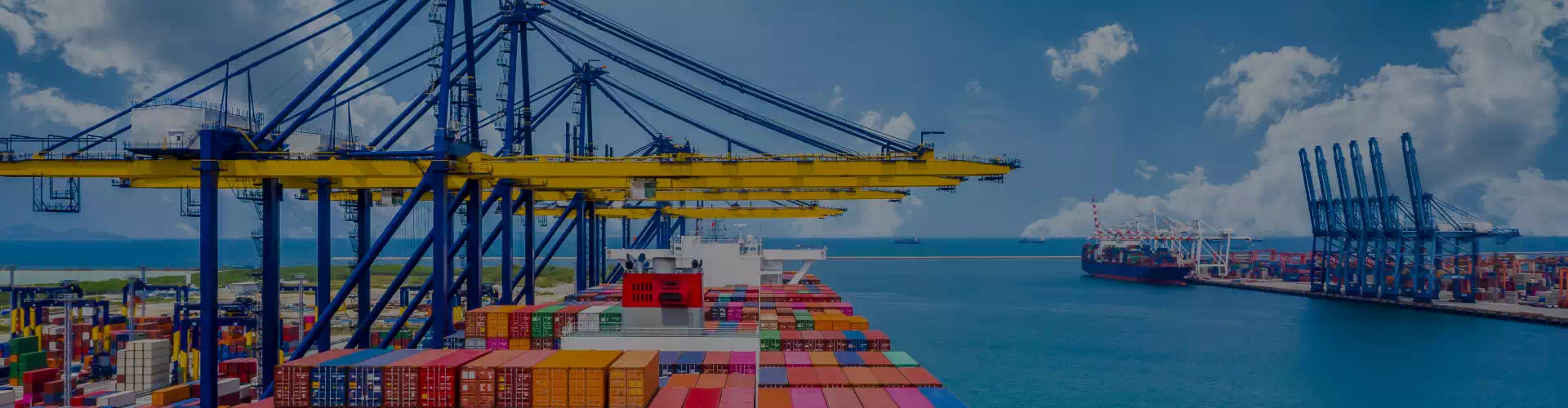
When it comes to material handling in hazardous environments, safety is the ultimate priority. However, choosing the right Explosion-proof Bridge Crane goes beyond just ensuring the equipment meets Ex-certification standards. Facility managers and engineers often face a critical dilemma: Should they opt for a Single Girder Explosion-proof Crane or a Double Girder Explosion-proof Crane?
While both types are engineered with flameproof enclosures, spark-resistant wheels, and explosion-proof electrical systems to operate safely in Zone 1 or Zone 2 hazardous areas, their structural differences significantly impact lifting capacity, headroom, and total cost of ownership. This guide provides a comprehensive comparison to help you make the most strategic decision for your facility.
1. Structural Design and Lifting Capacity
The most fundamental difference lies in their structural architecture and load-bearing capabilities.
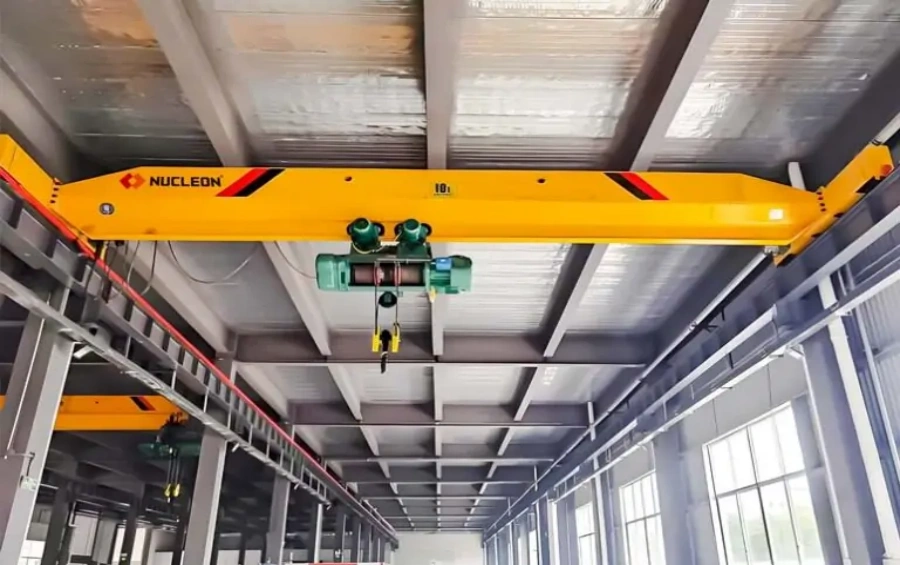
▪Single Girder Explosion-proof Cranes: Consist of one main bridge girder with the hoist suspended below it. They are typically designed for light to medium-duty applications, generally ranging from 1 ton to 20 tons (with some custom models up to 32 tons).
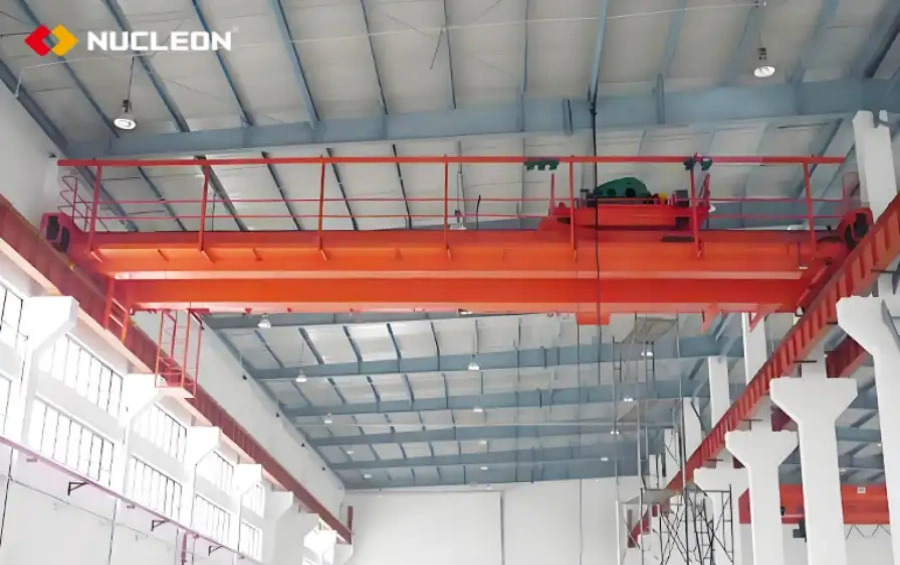
▪Double Girder Explosion-proof Cranes: Feature two parallel main girders, providing a dedicated platform for the hoist to travel on. This robust structure is engineered for heavy-duty and extreme-duty applications, easily handling capacities from 10 tons up to 200 tons or more.
2. Headroom and Space Utilization
In hazardous environments like chemical plants or oil refineries, maximizing vertical space is often a top priority.
▪Single Girder Advantage: Because the hoist hangs beneath the main beam, single girder cranes offer superior headroom. For facilities with low ceilings or restricted building heights, a single girder explosion-proof crane maximizes the usable lifting height without requiring costly structural modifications to the building.
▪Double Girder Trade-off: The hoist sits on top of the girders, which consumes additional vertical space. However, this design allows for the installation of a maintenance walkway between the girders, providing easier and safer access for inspecting and servicing explosion-proof components.
3. Cost and Maintenance Considerations
Budget constraints are always a factor, but in hazardous areas, lifecycle costs matter just as much as the initial purchase price.
▪Initial Investment: Single girder explosion-proof cranes are significantly more cost-effective. They require less steel, have a simpler mechanical structure, and are lighter, which can also reduce the cost of the supporting building structure.
▪Maintenance & Longevity: Double girder cranes, while having a higher upfront cost (often 20% to 40% more than single girder equivalents), offer superior stability and reduced wear on the hoist mechanism. For facilities operating 24/7 with high lifting frequencies, the double girder design provides better long-term reliability and lower maintenance downtime.
4. Application Scenarios: Where Does Each Excel?
Understanding your specific operational environment is the key to making the right choice.
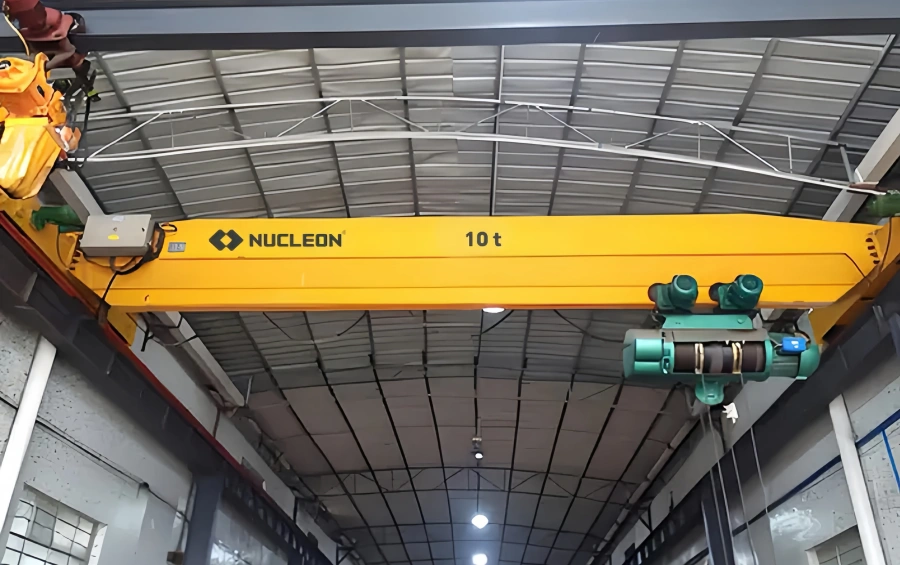
▪Choose Single Girder When: You are managing a smaller chemical processing unit, a paint mixing facility, or a pharmaceutical warehouse with moderate lifting needs. They are perfect for light-to-medium duty cycles (e.g., FEM/ISO A3 or A4) where space is at a premium and budget optimization is critical.
▪Choose Double Girder When: You are operating in large-scale petrochemical refineries, offshore oil platforms, or heavy-duty mining facilities. If your operations involve lifting massive reactors, heavy valves, or require high-frequency, continuous lifting (e.g., FEM/ISO A5 or above), the double girder explosion-proof crane is the only safe and viable option.
Final Verdict: Safety Meets Strategic Engineering
There is no "one-size-fits-all" solution in hazardous lifting. A single girder explosion-proof crane offers unmatched space efficiency and cost savings for lighter tasks, while a double girder explosion-proof crane delivers the heavy-duty power and structural stability required for massive industrial operations.
Ready to Upgrade Your Hazardous Lifting Operations?
Selecting the wrong crane type can lead to costly retrofits or severe safety compliance issues. Let our engineering team help you evaluate your facility's hazard classification, lifting frequency, and spatial constraints.
Contact Us
Custom Ex-Crane Solutions: Tailored single or double girder designs matching your exact ExdIIBT4 or ExdIICT4 requirements.
Global Compliance: Fully certified with IECEx, ATEX, and national safety standards.
Expert Sizing: Unsure about your duty class? We’ll analyze your workflow to recommend the perfect crane.