

 English
 Español
 Русский
 العربية
 Français
 Deutsch
 Português
 Tiếng Việt
 ไทย
 Bahasa Indonesia
 Türkçe
 Italiano





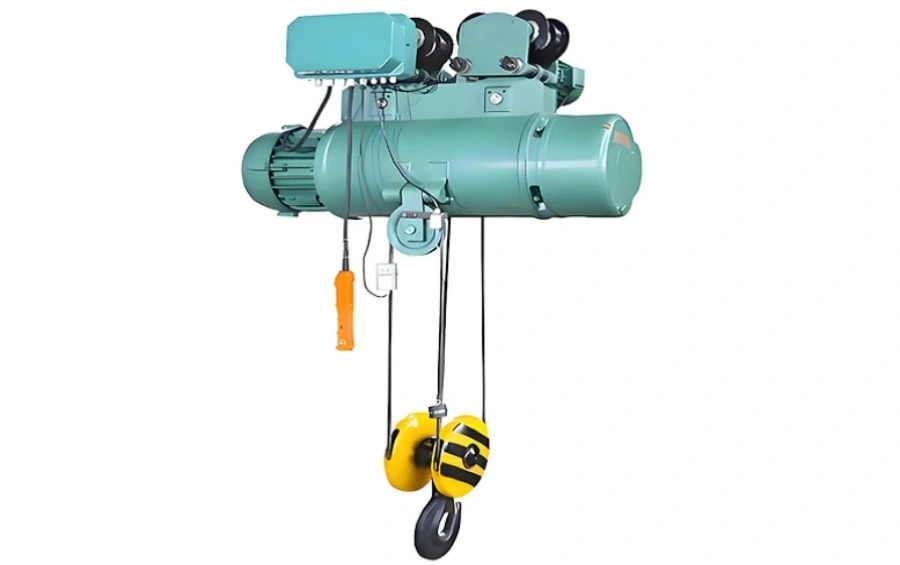
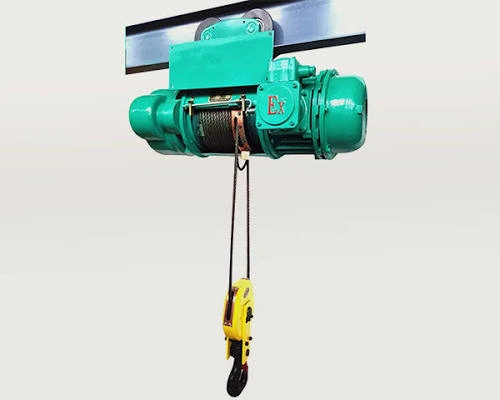
The term explosion-proof electric hoist is frequently misunderstood as a single product category, but in industrial engineering, it represents a highly specialized integration of mechanical design and electrical containment. Unlike standard lifting equipment, an explosion-proof hoist must guarantee that it will not serve as an ignition source in an atmosphere laden with flammable gases, vapors, or combustible dusts.
For procurement engineers and safety managers, the challenge is not just finding a hoist with an "Ex" label, but understanding the specific engineering parameters that make it safe. This guide details the mechanical and electrical distinctions, certification standards, and critical selection criteria required for safe operation in classified hazardous areas.
Decoding Hazardous Zones and Ex Ratings
The foundation of selecting an explosion-proof electric hoist is matching the equipment to the specific hazardous zone. Misidentifying the environment can lead to catastrophic safety failures or severe compliance violations.
Zone 1: An area where an explosive gas atmosphere is likely to occur in normal operation. Hoists here typically require Category 2G certification (e.g., Ex d IIB T4 Gb).
Zone 2: An area where an explosive atmosphere is unlikely or will only exist briefly. Category 3G equipment (e.g., Ex nA IIC T4 Gc) may be permissible, offering a more cost-effective solution.
Zone 21 / Zone 22: Dust presents a unique hazard as it can penetrate seals and accumulate on hot surfaces. Hoists for these zones require specific dust ignition protection (e.g., Ex tD) alongside high ingress protection ratings (IP65 or IP66).
Critical Note: Always verify the Gas Group (IIA, IIB, or IIC) and Temperature Class (T1-T6). IIC (e.g., hydrogen, acetylene) is the most stringent gas group; a hoist rated for IIC covers IIA and IIB, but the reverse is not true.
Mechanical Engineering: Spark-Resistant Design
In hazardous areas, mechanical friction is a primary ignition risk. An explosion-proof hoist mitigates this through specialized material science:
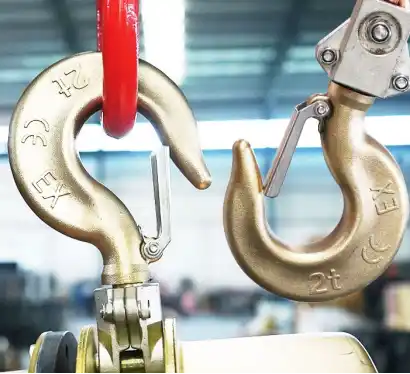
Non-Ferrous Components: The load chain, hook, and hook block are typically manufactured from copper-beryllium or aluminum-bronze alloys. These materials eliminate friction sparks even if the hook accidentally strikes a steel beam.
Trolley and Buffer Systems: Trolley wheels and bumpers are often made from bronze or specialized conductive polymers to prevent static buildup and sparking on the runway beam.
Brake Systems: Brakes generate significant heat. Explosion-proof designs utilize external cooling fins or enclosed brake mechanisms to ensure that friction heat is dissipated safely without exceeding the designated Temperature Class.
Electrical Containment and Thermal Protection
The electrical systems of an explosion-proof electric hoist are engineered to contain or prevent ignition:
Flameproof Enclosures (Ex d): Electrical components like contactors, limit switches, and VFDs are housed in heavy-duty cast iron or stainless steel enclosures. These are machined to precise tolerances so that if an internal arc occurs, the enclosure contains the blast and cools escaping gases through flame paths.
Increased Safety (Ex e): Components that do not produce arcs in normal operation (e.g., terminal boxes, motor windings) use Ex e designs, focusing on secure connections and enhanced thermal monitoring.
Thermal Monitoring: Motors are equipped with PTC thermistors that immediately cut power if winding temperatures approach unsafe levels, ensuring the surface temperature never exceeds the T-Code limit (e.g., 135°C for T4).
Installation and Maintenance Protocols
Installation of explosion-proof equipment is strictly regulated. Improper installation voids certifications and compromises safety.
Cable Glanding: This is the most common failure point. Only certified Ex-rated cable glands must be used, and the cable armor must be properly terminated to ensure continuity of the earth path.
Bonding and Grounding: All metallic parts of the hoist, trolley, and runway system must be electrically continuous and grounded to prevent static electricity accumulation. Resistance values should be tested and documented.
Non-Sparking Tools: Maintenance personnel must use non-sparking tools (beryllium-copper) when performing adjustments or repairs on the hoist in a live hazardous zone.
Regulatory Compliance and Documentation
Procurement is not complete without the correct documentation. For international trade and site safety audits, ensure the supplier provides:
ATEX Certificate (EU) or IECEx Certificate (International): Verify the certificate number against the official database.
Declaration of Conformity: Specific to the machinery directive and explosive atmosphere directives.
Instruction Manual: Must include specific safety instructions for hazardous areas, not just general operation.
Investing in a certified explosion-proof electric hoist is an investment in operational continuity and personnel safety. By focusing on the specific zone requirements, material science, and thermal management of the equipment, buyers can ensure they select a solution that meets both regulatory standards and practical industrial demands.
Frequently Asked Questions
Q: Can I use a standard hoist with a VFD to make it explosion-proof?
A: No. Adding a VFD controls speed but does not address mechanical sparking, surface temperature limits, or electrical containment. A standard hoist modified with a VFD is not compliant for hazardous zones unless the entire system is re-certified as an integrated explosion-proof unit.
Q: What is the difference between "Flameproof" (Ex d) and "Increased Safety" (Ex e)?
A: "Flameproof" (Ex d) means the enclosure can withstand an internal explosion without letting it escape. "Increased Safety" (Ex e) applies to components that do not produce arcs in normal operation, focusing on preventing high temperatures and ensuring secure connections. Most explosion-proof hoists use a combination of both.
Q: Do explosion-proof hoists have a lower duty cycle than standard hoists?
A: Often, yes. Because the motors are enclosed in heavy cast iron housings for explosion containment, heat dissipation is less efficient than in open-design standard motors. This can result in a lower FEM/ISO duty class rating compared to a similarly sized standard hoist. Always check the duty cycle rating carefully.
Q: Is an IP65 rating the same as explosion-proof?
A: No. IP65 refers to ingress protection against dust and water jets. While explosion-proof hoists for dust zones often require IP65/66, a standard IP65 hoist lacks the spark-resistant materials, thermal monitoring, and flameproof electrical enclosures required to prevent explosions in gas or combustible dust atmospheres.