

 English
 Español
 Русский
 العربية
 Français
 Deutsch
 Português
 Tiếng Việt
 ไทย
ไทย
 Bahasa Indonesia
 Türkçe
 Italiano





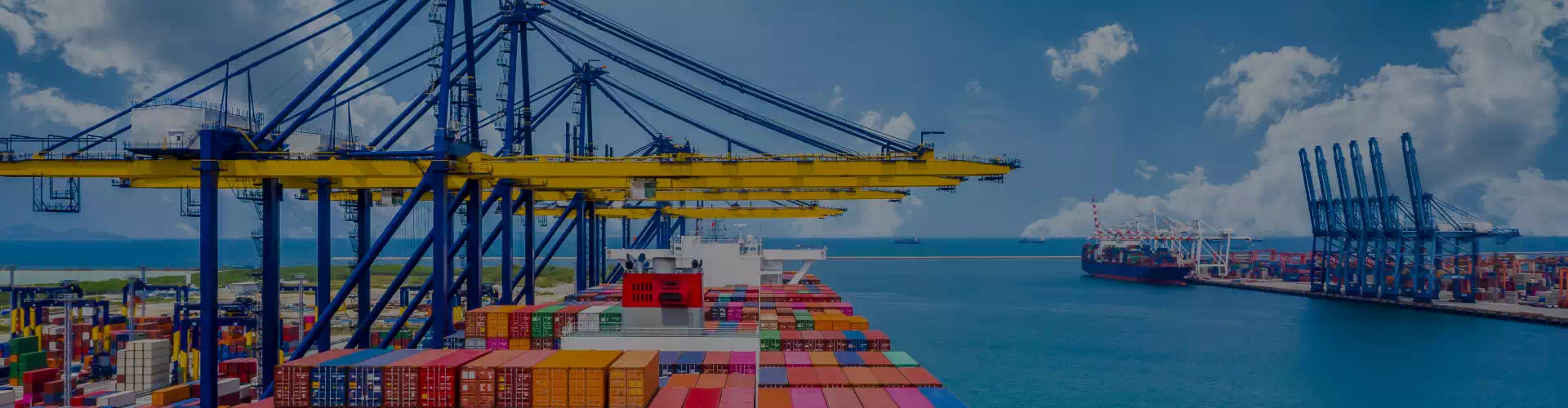
Handling molten metal requires lifting equipment that goes far beyond standard industrial specifications. Choosing the right foundry casting bridge crane is critical for ensuring absolute safety, preventing catastrophic accidents, and maintaining continuous production in extreme metallurgical environments. Before making a procurement decision, it is essential to understand how these specialized cranes handle extreme heat, the redundant safety mechanisms they employ, and the precision control systems required to safely transport liquid metal.
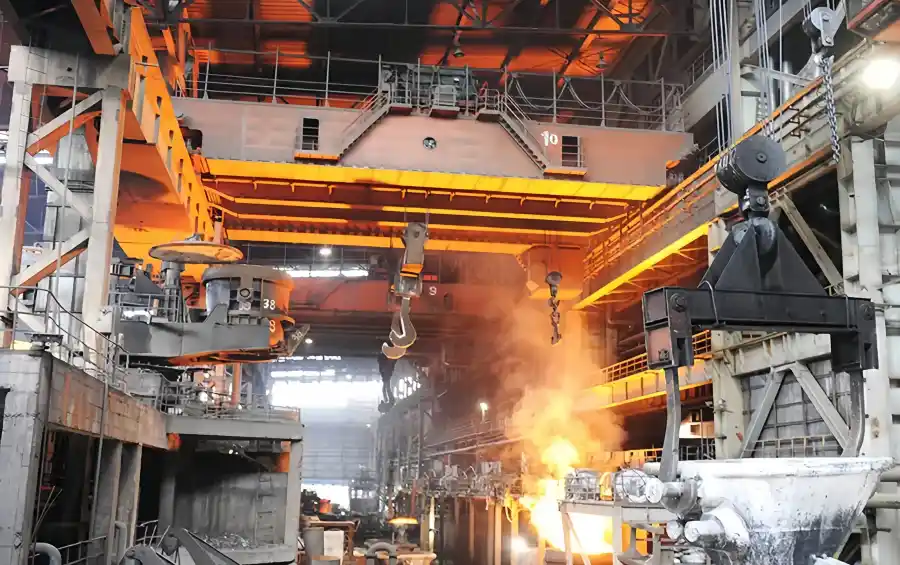
What is a Foundry Casting Bridge Crane?
A foundry casting bridge crane is a heavy-duty, specialized overhead lifting system engineered specifically to operate in extreme metallurgical environments. Unlike standard cranes, these machines are designed to safely handle and transfer molten iron, molten steel, and other high-temperature materials. They are built to withstand severe conditions, including high ambient temperatures, intense thermal radiation, heavy dust, and harmful gases. Every component, from the structural steel to the electrical systems, is reinforced to ensure reliability and safety when lifting hazardous, high-temperature loads.
Core Safety Mechanisms: Redundancy and Anti-Drop Systems
When lifting liquid metal, safety is the absolute top priority. Nucleon foundry casting cranes are engineered with multiple layers of redundant safety systems to prevent catastrophic failures:
Redundant Hoisting Systems: Equipped with dual hoisting mechanisms, meaning if one motor or gearbox fails, the backup system can safely support and lower the molten metal ladle.
Double Braking Systems: All hoisting and trolley movements feature dual brakes to ensure immediate and secure stopping.
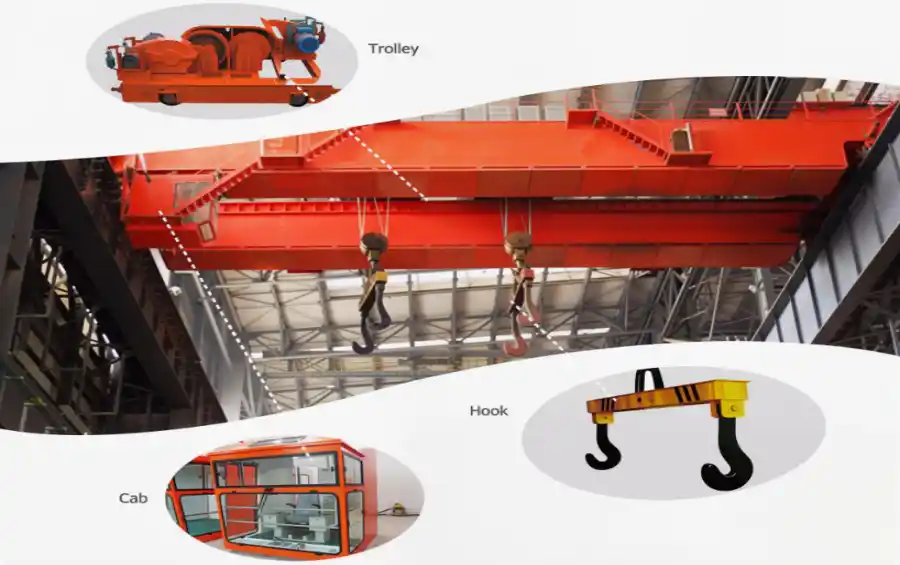
Specialized Casting Hooks: Utilizing forged P-type hooks with heavy-duty safety latches to prevent the ladle from accidentally disengaging during transit.
Overload Protection: Advanced electronic scales and load limiters prevent the crane from attempting to lift loads beyond its safe working capacity.
Thermal Protection and Component Durability
To survive the punishing heat of a foundry, Nucleon casting cranes incorporate specialized thermal protection measures:
Heat Shields and Insulation: Critical components, including electrical panels and wire ropes, are protected by high-performance heat shields and thermal insulation boards to prevent warping or degradation.
High-Temperature Electricals: Motors and brakes utilize Class H or F insulation to withstand extreme operating temperatures without failure.
Insulated Operator Cabin: The control cabin is fully sealed and insulated, featuring tempered glass and a dedicated air conditioning system to protect the operator from radiant heat and dust.
Specialized Lubrication: High-temperature seals, oils, and greases are used throughout the crane to prevent premature wear and leakage.
Precision Control and Smooth Operation
Pouring molten metal requires extreme precision to prevent splashing and ensure process safety. Nucleon casting cranes are equipped with advanced control technologies:
Variable Frequency Drives (VFD): Provide stepless speed control, allowing for smooth acceleration and deceleration, which eliminates sudden jerks that could cause molten metal to splash.
Anti-Sway Technology: Minimizes load swing during trolley and bridge movements, ensuring accurate and stable positioning over furnaces and ladle turrets.
Micro-Speed Control: Enables millimeter-level precision for delicate pouring and alignment tasks.
Typical Applications in the Steelmaking Process
Nucleon foundry casting cranes are deployed across various critical stages of the metallurgical production line:
Converter Bays: Charging hot metal into converters and lifting molten steel to refining furnaces.
Refining Bays: Transferring molten steel between different refining stations and ladle turrets.
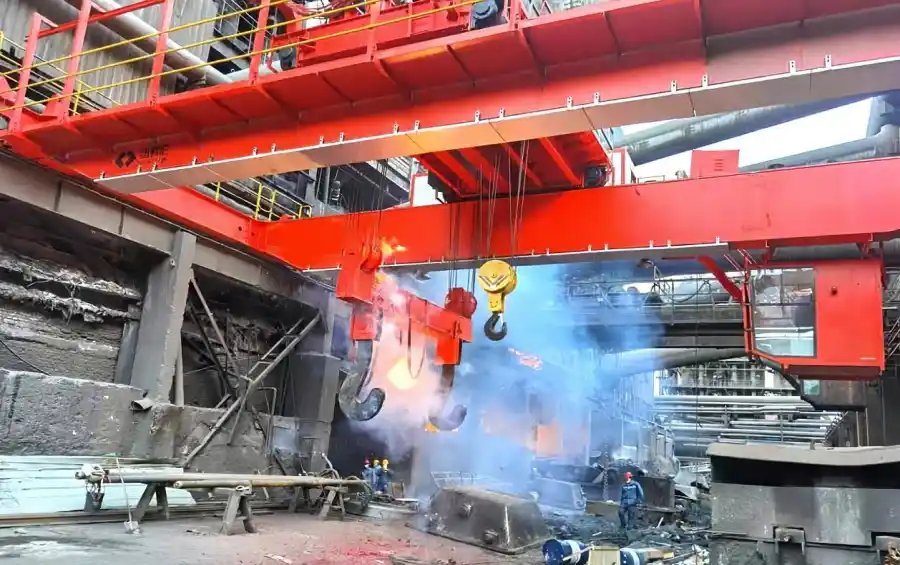
Continuous Casting Areas: Safely lifting and pouring molten steel into continuous casting molds.
Heavy Foundries: Handling large crucibles, molds, and heavy castings in steel, aluminum, and copper production facilities.
Frequently Asked Questions
Q: What is the standard working duty class for foundry casting cranes?
A: Foundry casting cranes are designed for continuous, heavy-duty operation and are typically classified as A7 or A8 duty class, ensuring they can handle frequent, high-intensity lifting cycles.
Q: Can Nucleon customize casting cranes for specific foundry layouts?
A: Absolutely. Nucleon offers fully customized solutions, including various girder configurations (double-girder, four-girder), specialized cabin insulation, and integration with smart monitoring systems to match your exact foundry requirements.
Q: How does Nucleon ensure the crane operates safely in extreme heat?
A: We utilize comprehensive thermal protection, including heat shields for electrical panels, high-temperature insulated motors, and specialized heat-resistant wiring and lubricants to maintain structural integrity and operational safety.
Contact us
If you need a customized foundry casting bridge crane solution, please send us your lifting capacity, span, lifting height, working duty class, and specific metallurgical application. Nucleon's engineering team can help you choose the safest and most suitable model and provide a professional quotation.