
 English
 Español
 Русский
 العربية
 Français
 Deutsch
 Português
 Tiếng Việt
 ไทย
ไทย
 Bahasa Indonesia
 Türkçe
 Italiano






In the dynamic world of material handling, finding the perfect balance between lifting capacity, flexibility, and budget is crucial for any facility.
The Gantry Crane with Electric Hoist has emerged as the definitive solution for this challenge. By combining a robust, freestanding gantry frame with a highly efficient electric hoist, this system provides a versatile lifting powerhouse that can operate indoors or outdoors without relying on existing building structures.
1. What is a Gantry Crane with Electric Hoist?
A gantry crane with an electric hoist is a type of lifting equipment where the primary lifting mechanism is an electric hoist (either a wire rope hoist or a chain hoist), rather than a traditional heavy-duty winch. The hoist travels horizontally along the main beam(s) of the gantry, while the entire crane structure moves longitudinally on ground-level rails or wheels.
These cranes are typically classified under medium-duty working standards (such as A3 to A5) and are specifically engineered for general material handling, loading/unloading, and short-distance transportation in factories, open-air storage yards, and warehouses. They are renowned for their straightforward structure, reliable performance, and economical pricing.
2. Key Configurations: Single Girder vs. Double Girder
Choosing the right structural configuration is essential for optimizing your investment:
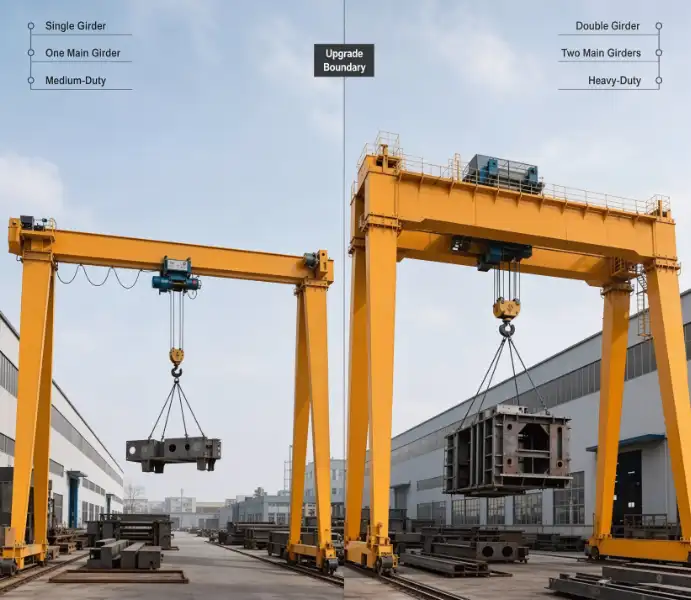
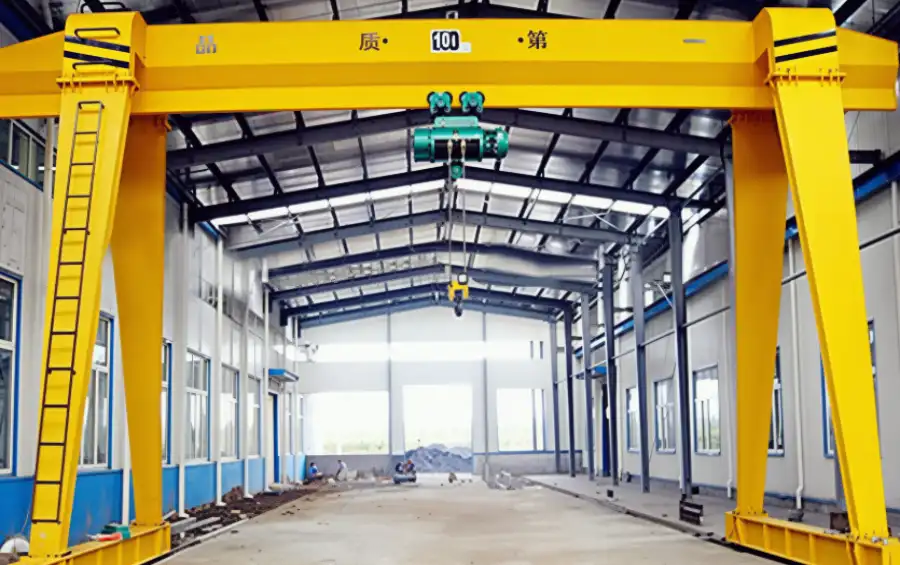
●Single Girder Gantry Crane: This is the most popular and cost-effective configuration. It features a single main beam with the electric hoist suspended directly beneath it. It is ideal for lifting capacities ranging from 1 to 20 tons and spans up to 30 meters. Its compact design maximizes lifting height and is perfect for small to medium-sized workshops and outdoor storage yards.
●Double Girder Gantry Crane: Designed for heavier loads and wider spans, this configuration utilizes two parallel main beams. The electric hoist is mounted on a trolley that travels on top of the beams. This provides superior structural stability, higher lifting capacities (up to 50 tons or more), and is better suited for frequent, heavy-duty operations.
3. Strategic Advantages for Your Facility
Integrating a gantry crane with an electric hoist brings immediate operational and financial benefits:
●No Building Support Required: Because the crane is supported by its own legs, it eliminates the need for expensive overhead runway beams or structural reinforcement of your warehouse. This makes it a highly economical choice for existing facilities or rented spaces.
●Cost-Effective Lifting Solution: Utilizing an electric hoist as the lifting mechanism significantly reduces manufacturing costs compared to traditional winch-driven gantry cranes, offering an excellent return on investment.
●Flexible Control Options: Operators can choose from floor-mounted push-button pendants, wireless radio remote controls, or an enclosed operator cabin, ensuring optimal safety and ergonomic efficiency based on the specific workflow.
●Customizable Power Supply: These cranes can be powered via cable reels or high-altitude safety sliding lines (busbars), providing reliable and safe electrical power for both indoor and outdoor environments.
4. Critical Selection Criteria
When specifying a gantry crane with an electric hoist, consider these essential parameters:
●Load Capacity & Span: Accurately determine your maximum lifting weight and the required coverage width. Ensure the electric hoist selected matches the duty cycle of your operations.
●Lifting Height & Headroom: Evaluate the vertical clearance of your facility. Single girder designs offer superior headroom, while double girder models accommodate higher lifting heights.
●Working Environment: For outdoor applications, ensure the crane is specified with weatherproof electrical components, anti-corrosion coatings, and wind-clamping devices to withstand harsh weather conditions.
●Mobility: Decide whether the crane will operate on fixed ground rails for dedicated lifting zones or if a mobile (rubber-tyred) base is required for dynamic layouts.
Frequently Asked Questions
Q1: What is the typical lifting capacity for this type of crane?
A: Gantry cranes with electric hoists are generally designed for light to medium-duty applications, typically ranging from 1 ton to 50 tons. For loads exceeding this range, a traditional winch-driven gantry crane is usually recommended.
Q2: Can I use a wireless remote control with this crane?
A: Absolutely. Wireless radio remote controls are highly recommended for gantry cranes with electric hoists. They allow the operator to maintain a safe distance from the load, choose the best vantage point, and improve overall operational efficiency.
Q3: Is this crane suitable for outdoor storage yards?
A: Yes, they are extensively used in outdoor yards. However, for outdoor use, it is critical to specify IP54/IP55 protection ratings for the electrical systems, marine-grade anti-corrosion paint, and automatic wind rail clamps to ensure safety during storms.
Contact Us
●Site-Specific Sizing: We’ll analyze your facility’s dimensions, load requirements, and duty cycle to recommend the perfect crane configuration.
●Custom Configurations: From specialized lifting attachments to VFD controls and wireless remotes, we tailor the crane to your exact workflow.
●Comprehensive Support: Enjoy peace of mind with our expert installation guidance, operator training, and global spare parts supply.