

 English
 Español
 Русский
 العربية
 Français
 Deutsch
 Português
 Tiếng Việt
 ไทย
ไทย
 Bahasa Indonesia
 Türkçe
 Italiano






What is a Low Headroom Gantry Crane?
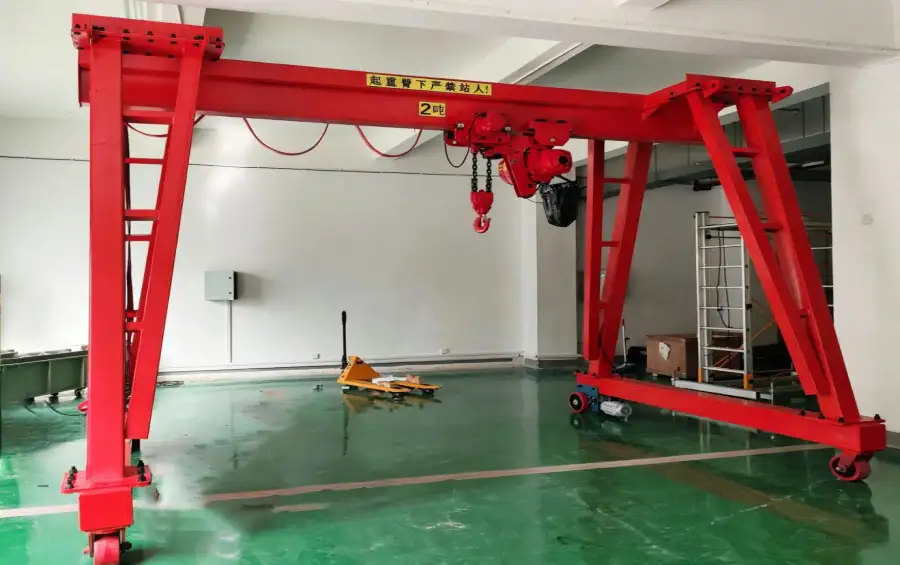
A low headroom gantry crane is a specialized type of lifting equipment engineered for indoor environments with restricted vertical space. Unlike traditional cranes that require a large amount of clearance between the hoist and the main beam, low headroom models feature a highly compact structure.
The defining characteristic of this crane is its optimized design. The hoist and trolley are positioned as close to the main girder as possible, significantly reducing the overall height of the equipment. This compact construction minimizes the distance between the crane's main beam and the ceiling, ensuring that every inch of vertical space is utilized effectively. Despite their reduced size, these cranes maintain impressive lifting capacities, making them ideal for tight but demanding environments.
Key Advantages for Space-Constrained Facilities
Integrating a low headroom gantry crane into your workflow offers several strategic advantages for facility managers and business owners:
●Maximized Lifting Height: The primary benefit is the dramatic increase in usable lifting height. By reducing the crane's own footprint, you can lift loads higher within the same ceiling limit, preventing the need for costly building modifications.
●Cost-Effective Construction: For businesses building new steel-structure factories or warehouses, incorporating low headroom cranes from the outset reduces the need for tall building structures. This translates directly to lower steel structure and roofing costs, saving significant capital on construction.
●Enhanced Safety: Tight spaces increase the risk of collisions with ceilings, pipes, or overhead obstacles. The low-profile design of these cranes provides safe clearance, reducing the risk of accidents and equipment damage.
●Versatile Control Options: To accommodate narrow aisles and tight workspace, these cranes can be equipped with remote controls, wired pendants, or cabin operations. This allows operators to control the crane safely from the ground, further enhancing safety in low-clearance areas.
Common Applications
Because of their space-saving design, low headroom gantry cranes are widely used across various industries:
●Warehouses and Storage Facilities: Perfect for maximizing vertical storage and moving heavy pallets in buildings with low overhead clearance.
●Manufacturing Workshops: Ideal for assembly lines, machine shops, and fabrication plants where overhead duct work or lighting limits vertical space.
●Retrofitting Older Buildings: Many older industrial buildings have lower roof lines. Low headroom cranes provide a highly adaptable lifting solution without requiring structural renovations.
How to Choose the Right Low Headroom Gantry Crane
Selecting the right crane requires careful assessment of your specific operational needs. When evaluating your options, consider the following factors:
1.Assess Facility Height and Clearance: Accurately measure the vertical distance from the floor to the lowest overhead obstruction (ceiling, pipes, lights). This will dictate the maximum crane height and lifting height you can achieve.
2.Determine Lifting Capacity and Span: Evaluate the maximum weight of the loads you need to move and the width of the area the crane needs to cover. Low headroom cranes are available in various capacities, typically ranging from light-duty (1 to 20 tons) for single girder models to heavy-duty (up to 500 tons) for double girder configurations.
3.Consider the Work Duty: Match the crane’s work class (e.g., A3, A4) to your operational frequency. High-frequency lifting requires a more robust, heavy-duty model.
Frequently Asked Questions (FAQ)
Q: Will a low headroom gantry crane compromise my lifting capacity?
A: Not at all. While the crane's physical height is reduced, its structural integrity and lifting power remain robust. You can safely lift significant weights without sacrificing performance.
Q: Can I customize the span and lifting height?
A: Yes. Most manufacturers offer customizable configurations tailored to your facility's exact dimensions, ensuring full coverage of your workspace and adaptability to your layout.
Q: Are these cranes difficult to install in existing buildings?
A: Low headroom cranes are actually ideal for retrofitting. Their space-efficient design makes them highly adaptable for integrating into existing buildings with evolving facility layouts, often without requiring major structural modifications.
Contact Us for Custom Lifting Solution
Is your facility struggling with limited ceiling height but still requiring efficient, heavy-duty lifting? A low headroom gantry crane could be the perfect solution to optimize your workspace and improve material handling performance.
Our engineering team specializes in designing customized lifting solutions tailored to your unique spatial constraints and operational needs.
●Get a Free Site Assessment: Send us your facility dimensions, lifting requirements, and workspace layout. We will provide a preliminary design and competitive quotation.
●Expert Guidance: Not sure about the right capacity or span? Our experts are here to help you make an informed, cost-effective decision.