
 English
 Español
 Русский
 العربية
 Français
 Deutsch
 Português
 Tiếng Việt
 ไทย
ไทย
 Bahasa Indonesia
 Türkçe
 Italiano





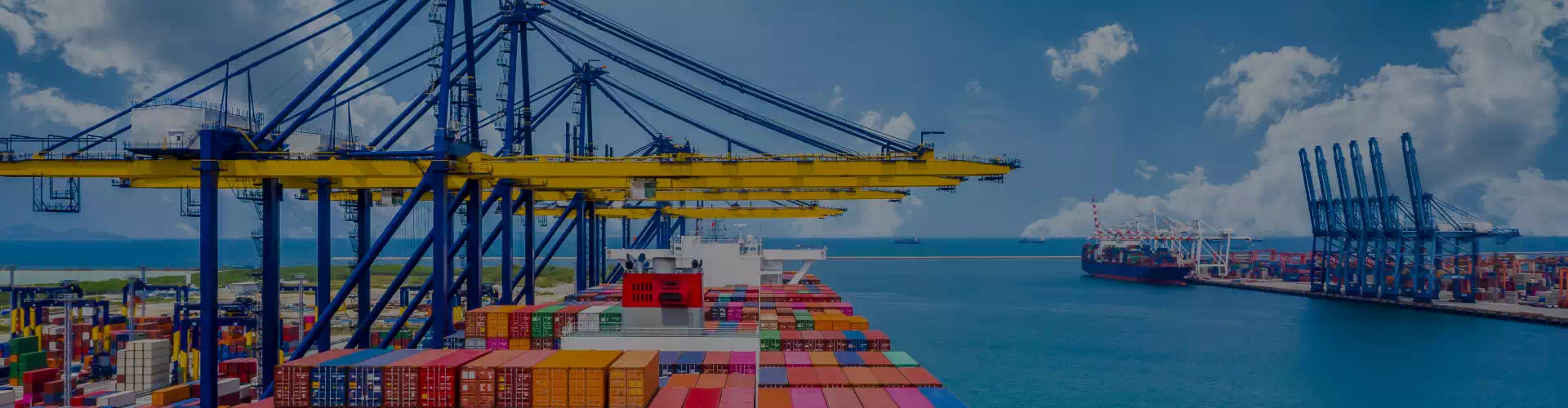
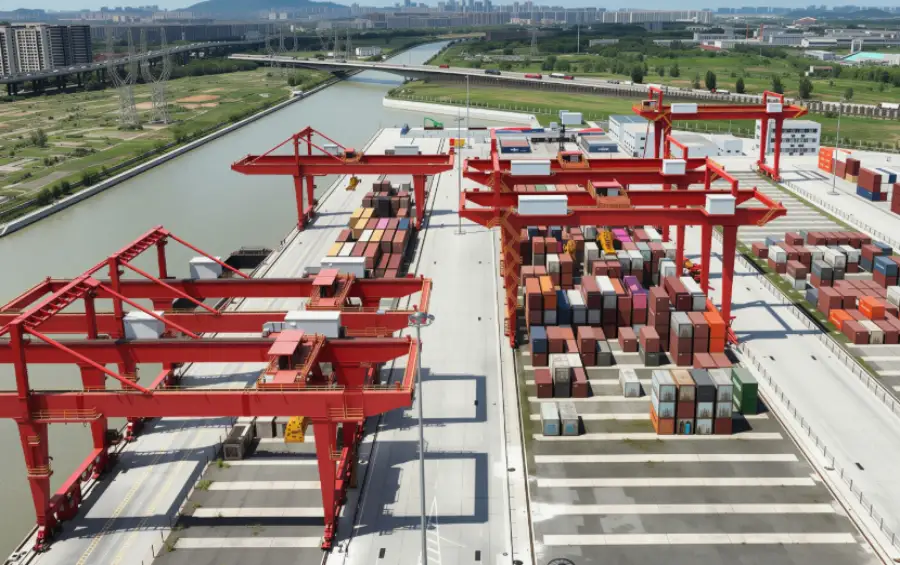
In the modern global supply chain, efficiency is the ultimate currency. At the heart of high-volume container terminals, railway freight yards, and inland logistics hubs lies a critical piece of equipment: the Rail Mounted Container Gantry Crane (RMG). Designed for precision, durability, and seamless automation, the RMG crane is the backbone of contemporary container handling.
This comprehensive guide explores the mechanics, structural variations, and operational advantages of RMG cranes, helping terminal operators and logistics managers optimize their yard operations.
1. What is a Rail Mounted Container Gantry Crane?
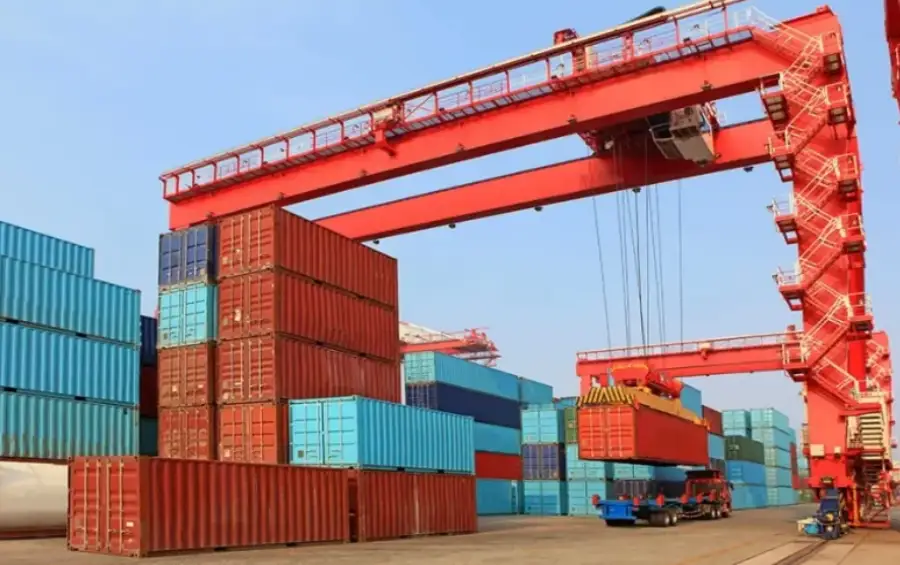
A Rail Mounted Container Gantry Crane (RMG) is a specialized, large-scale lifting equipment designed specifically for the loading, unloading, stacking, and transfer of standard shipping containers. Unlike mobile cranes, RMGs operate on fixed ground-level rails, allowing them to travel the entire length of a container yard block.
They are engineered to handle standard 20-foot, 40-foot, and 45-foot containers, as well as twin 20-foot lifts. With lifting capacities typically ranging from 30 to over 100 tons and the ability to stack containers up to 7 or 9 layers high, RMGs maximize vertical storage space and streamline the flow of cargo between ships, trucks, and trains.
2. Core Components: The Anatomy of an RMG
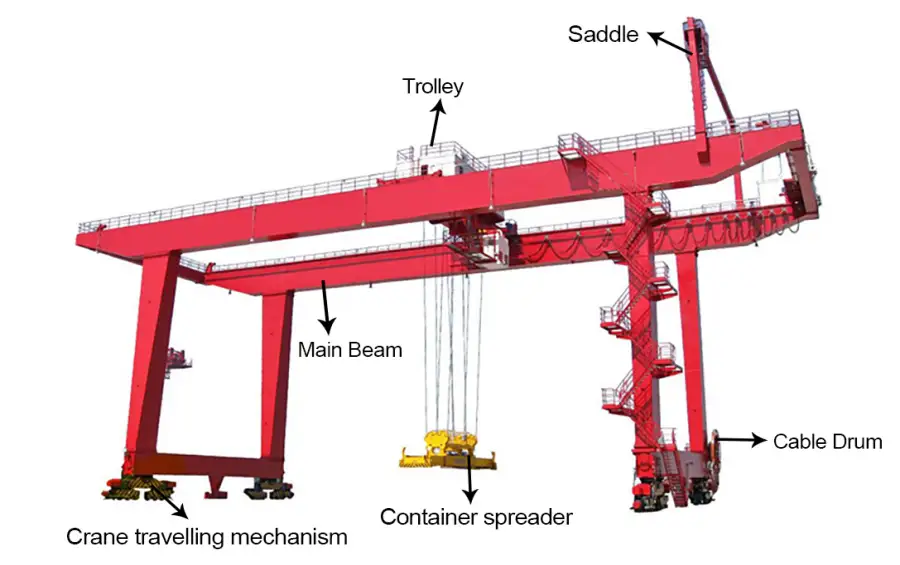
An RMG crane is a marvel of mechanical and electrical engineering, consisting of several critical subsystems:
●Metal Structure: The robust steel framework includes the main girder(s), rigid and flexible legs, and crossarms. It is typically built using a box-girder design to provide immense strength and torsional stability.
●Hoisting Mechanism: This system handles the vertical lifting of containers. It primarily utilizes a wire rope drum driven by a high-performance motor, or alternatively, a rigid telescopic spreader system. It is equipped with heavy-duty brakes and high-strength wire ropes.
●Trolley Travel Mechanism: The trolley moves horizontally across the main girder, allowing the crane to reach specific container rows within the span.
●Gantry Travel Mechanism: Driven by multiple wheel sets, this mechanism propels the entire crane longitudinally along the fixed ground rails to cover the length of the yard.
●Anti-Sway System: A crucial module that actively or passively suppresses the pendulum motion of the container during lifting and trolley movement, ensuring rapid and precise stacking.
●Electrical & Control System: Modern RMGs utilize AC Variable Frequency Drives (VFD) for smooth, energy-efficient operation. They are integrated with PLCs, laser positioning, and wireless communication (Wi-Fi/5G) to connect seamlessly with Terminal Operating Systems (TOS).
3. Structural Variations: Cantilever vs. Non-Cantilever
The structural design of an RMG is determined by the specific layout of the container yard and the types of vehicles it serves. They are primarily categorized by their boom (cantilever) configuration:
●Non-Cantilever RMG: The main girder sits entirely between the two legs. This design is structurally simpler and is typically used when containers are only handled within the space between the crane's legs.
●Single Cantilever RMG: Features an overhanging boom on one side. This allows the crane to service a truck loading lane or a railway track on one side while stacking containers in the main yard on the other side.
●Double Cantilever RMG: Features overhanging booms on both sides. This is ideal for high-efficiency terminals where the crane needs to service both a landside truck/rail lane and a waterside transfer point simultaneously. The legs are typically designed in a "U" or "Π" shape to allow trucks or trains to pass through the crane's internal space.
4. Ideal Applications and Strategic Advantages
RMG cranes are predominantly deployed in environments requiring high-density storage and high-throughput operations, such as seaport container terminals, railway intermodal yards, and large-scale inland logistics parks.
Key Advantages:
●Maximized Yard Density: By stacking containers 5 to 9 layers high, RMGs drastically optimize land utilization, reducing the overall footprint required for storage.
●Fully Automated Operations: Because they run on fixed rails and are electrically driven, RMGs are perfectly suited for computerized control. They can operate semi-automatically or fully autonomously, reducing reliance on manual labor and enhancing safety.
●High Reliability & Low Maintenance: With a simpler mechanical structure compared to rubber-tyred alternatives, RMGs offer high operational reliability and lower long-term maintenance costs.
●Green & Energy Efficient: Powered entirely by electricity, RMGs produce zero direct emissions. Advanced VFD systems with energy feedback technology can return braking energy to the grid, reducing overall power consumption by up to 40%.
Frequently Asked Questions
Q1: How does an RMG crane differ from an RTG crane?
A: The primary difference is mobility. RMGs run on fixed steel rails, making them highly precise and ideal for automated, high-density blocks. RTGs (Rubber Tyred Gantry cranes) use tires, offering the flexibility to move between different yard blocks but requiring more maintenance and offering less positioning precision.
Q2: Can RMG cranes operate in extreme weather conditions?
A: Yes. RMGs are designed for harsh outdoor environments. They are equipped with wind-speed monitoring systems, automatic wind rail clamps (to secure the crane during storms), and IP55/IP65 rated electrical enclosures to protect against salt spray, rain, and dust.
Q3: What happens if the two legs of the crane get out of sync?
A: For large-span RMGs (typically over 40 meters), asynchronous movement is a risk. Modern RMGs are equipped with advanced electronic synchronization devices and PLC control systems that continuously monitor and adjust the speed of both legs to ensure perfect alignment and prevent structural twisting.
Ready to Upgrade Your Container Yard Operations?
Selecting the right Rail Mounted Container Gantry Crane is a strategic investment in your terminal's future throughput and efficiency. Whether you require a standard 40-ton double cantilever RMG or a fully automated, high-stacking solution, our engineering team is ready to deliver.
Contact Us
●Yard Layout Optimization: We’ll analyze your throughput requirements to recommend the optimal span, stacking height, and cantilever configuration.
●Automation Integration: Ask us about integrating our RMGs with your existing Terminal Operating System (TOS) for seamless automated workflows.
●Lifecycle Support: From initial engineering and installation to operator training and global spare parts supply, we support your equipment for decades.