
 English
 Español
 Русский
 العربية
 Français
 Deutsch
 Português
 Tiếng Việt
 ไทย
 Bahasa Indonesia
 Türkçe
 Italiano





A workstation bridge crane is a modular lifting system engineered for high-frequency material handling within defined production zones. Unlike standard overhead cranes that rely on heavy I-beams and serve entire bays, this system uses cold-rolled enclosed track profiles to create a dedicated, ergonomic lifting environment. Its primary function is to reduce operator fatigue and optimize cycle times in assembly lines, machining cells, and packaging stations, rather than maximizing raw tonnage.
Enclosed Track Mechanics vs. Traditional I-Beam
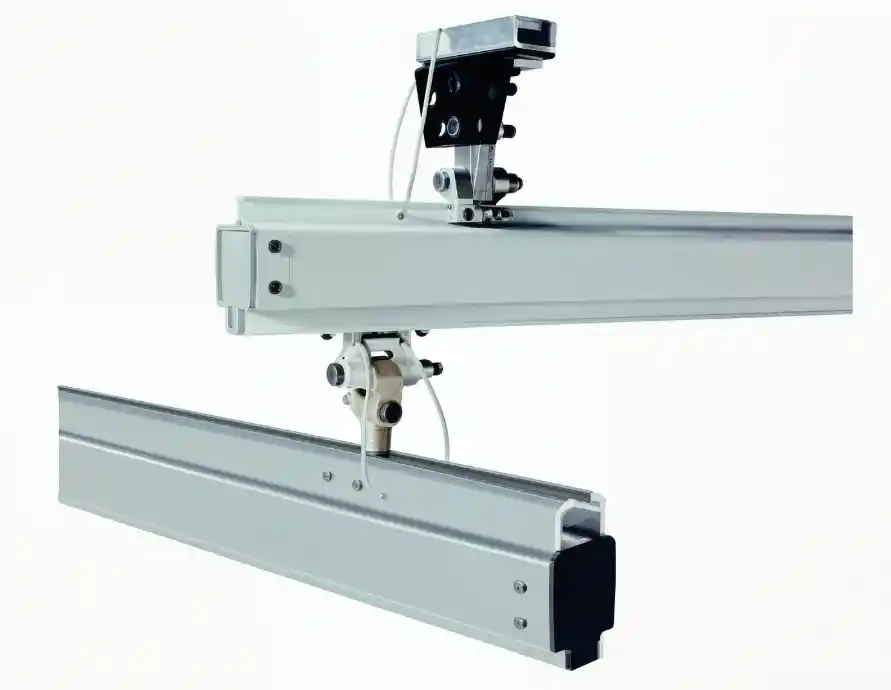
The defining technical feature of a workstation bridge crane is its enclosed track profile. Manufactured from high-strength, cold-rolled steel, these tracks are formed into a "C" or similar closed shape. This geometry provides superior torsional rigidity compared to open I-beams of equivalent weight.
• Sealed Interior: The enclosed design protects the trolley wheels from dust, debris, and moisture. This is critical in machining environments where metal shavings or packaging areas with cardboard dust are prevalent.
• Precision Alignment: The track is roll-formed to tight tolerances, ensuring a consistent running surface. This eliminates the "bump-bump" sensation common with welded I-beam splices, allowing for smooth, precise positioning of sensitive loads.
• Weight Efficiency: The high strength-to-weight ratio allows the crane to be supported by lighter building structures or existing columns without requiring massive reinforcement foundations often needed for traditional heavy cranes.
Modular Architecture and Adaptability
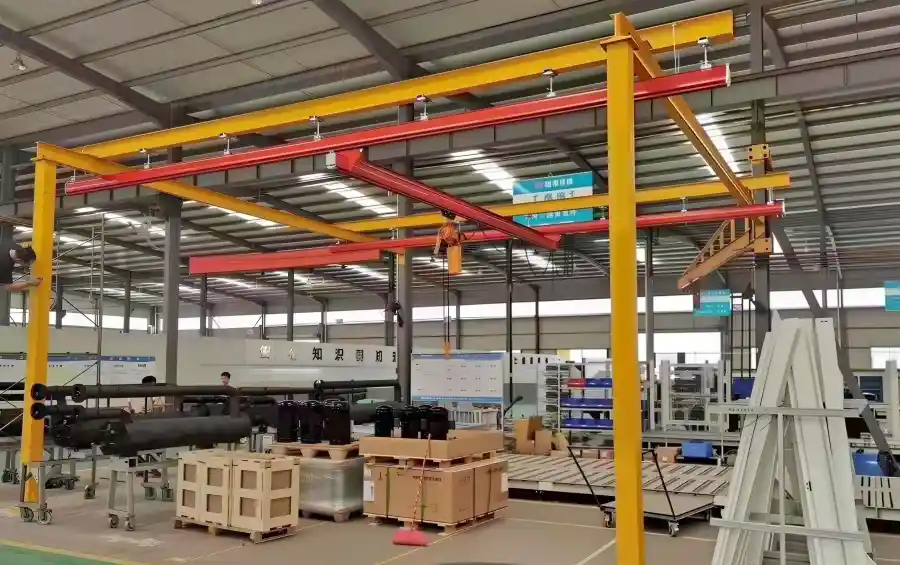
Workstation bridge cranes are designed as a "kit of parts." This modularity addresses the dynamic nature of modern manufacturing cells where production lines are frequently reconfigured.
• Adjustable Span: End trucks can often be repositioned along the runway beams to accommodate changes in cell width.
• Bolted Connections: Unlike field-welded heavy cranes, workstation systems typically use high-strength bolted connections. This allows for disassembly and relocation if the production line moves.
• Integration Ready: The track profile is designed to easily accept add-ons such as festoon cable systems, jib crane tie-backs, and manipulator balancers, making it a versatile backbone for automated or semi-automated workstations.
Load Capacity and Duty Cycle Considerations
While heavy industrial cranes focus on lifting 10+ tons occasionally, a workstation bridge crane typically handles loads ranging from 150 kg to 2,000 kg but does so continuously.
• Duty Class: These systems are generally rated for C3 to C5 duty cycles (FEM/ISO standards), meaning they are built for frequent starts/stops and long operating hours per shift.
• Low Headroom Design: To maximize vertical lifting height within limited facility clearances, the hoist trolley is designed to sit as close to the bottom flange of the track as possible. This ensures that every millimeter of building height is utilized for the lift itself, not the crane structure.
Selection Criteria for Procurement
When specifying a workstation bridge crane, buyers must look beyond simple capacity. The following parameters dictate system longevity and operator satisfaction:
1. Wheel Material: For quiet operation and floor protection, polyurethane or nylon wheels are standard. Steel wheels are reserved for extremely high-capacity or high-temperature applications but generate more noise and wear.
2. Drive Method: Manual push is suitable for light loads (<500kg) and short spans. For spans over 6 meters or loads exceeding 1,000kg, motorized travel drives are essential to prevent operator strain and ensure precise spotting.
3. Support Structure: Determine if the system will be ceiling-mounted (hanging from roof trusses) or floor-supported (freestanding). Freestanding workstation cranes are ideal for facilities with weak roof structures or when the crane needs to be independent of the building frame.
Frequently Asked Questions
Q: What is the maximum practical span for a workstation bridge crane?
A: While dependent on the specific load and profile series, spans up to 9 meters are common for capacities under 1,000kg. Beyond this, deflection control becomes difficult with enclosed track, and a light-duty I-beam system is usually more economical.
Q: Can a workstation bridge crane be installed on existing building columns?
A: Yes, provided the columns are structurally sound and aligned vertically. The system uses adjustable suspension clamps that bolt directly to the column flange or web. However, a structural engineer must verify the column's capacity to handle the dynamic wheel loads.
Q: How does the maintenance of an enclosed track system differ from an I-beam crane?
A: Enclosed tracks require less frequent cleaning since the running surface is protected. However, the internal surface cannot be visually inspected without removing end caps. Maintenance focuses on checking wheel wear indicators and ensuring track joints remain flush and tight.
Q: Is a workstation bridge crane suitable for outdoor use?
A: Generally, no. The enclosed track is designed for indoor environments. Outdoor exposure introduces moisture and temperature extremes that can cause internal corrosion and thermal expansion issues not present in controlled factory settings.