

 English
 Español
 Русский
 العربية
 Français
 Deutsch
 Português
 Tiếng Việt
 ไทย
ไทย
 Bahasa Indonesia
 Türkçe
 Italiano






Choosing the right lifting equipment is critical for optimizing workshop layout and improving material handling efficiency. Before purchasing, it is essential to understand whether a suspension crane fits your facility's specific spatial constraints and operational needs. This guide will help you navigate the features, applications, and advantages of electric single-girder suspension cranes.
What is an electric single-girder suspension crane?
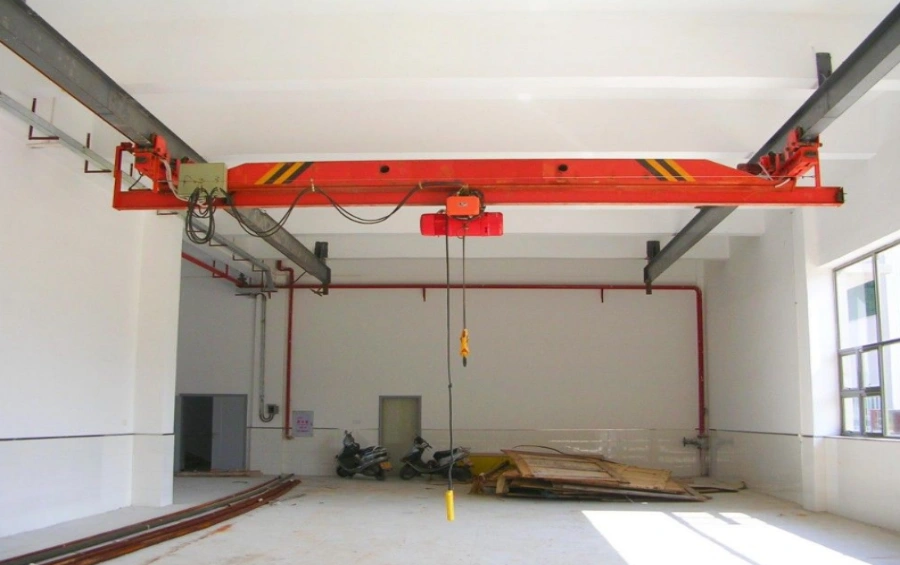
An electric single-girder suspension crane is a lightweight, compact lifting system where the main girder and hoist are suspended beneath overhead runway beams, which are directly attached to the factory's roof structure or upper support beams. Unlike traditional cranes that sit on top of runway beams, this underhung design allows the crane to utilize the upper space of the building, providing a highly efficient solution for vertical and horizontal material movement.
When should you choose a suspension crane?
A suspension crane is the ideal choice when your facility faces specific spatial or structural limitations:
Low Headroom: When the vertical space between the floor and the roof is limited, the compact design of a suspension crane maximizes the effective lifting height.
Space Constraints: When floor space is valuable and you need to keep the ground completely clear of support columns or ground-level tracks.
Lightweight Roof Structures: When your factory's roof structure cannot support the heavy wheel pressure of traditional overhead cranes. Suspension cranes distribute weight to the upper building framework, reducing structural load.
Irregular Layouts: When you need to route the crane around obstacles, as the track can be customized in curves or branching paths.
Key features of single-girder suspension cranes
These cranes are engineered to deliver practical performance in light to medium-duty applications:
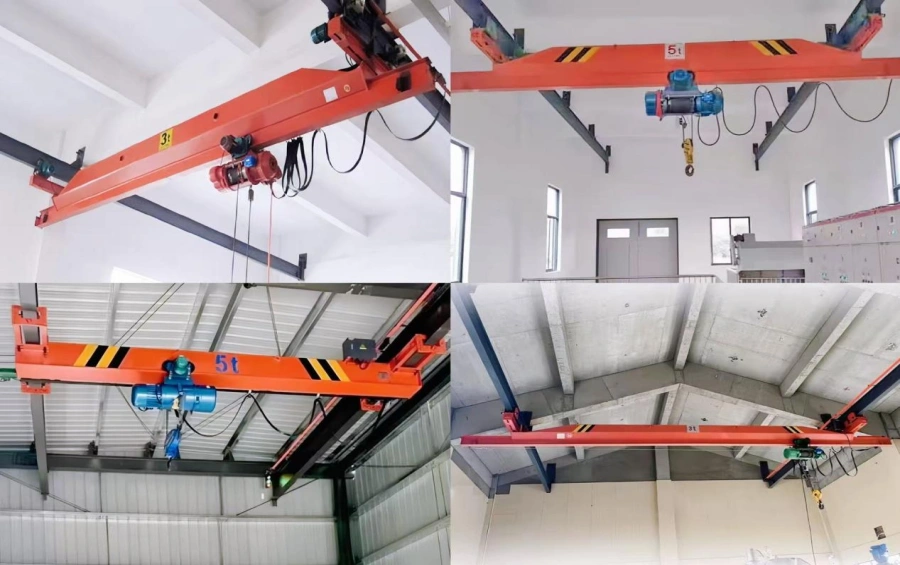
Space Optimization: By hanging from the roof, they free up 100% of the floor space for production lines, storage, or other equipment.
Cost-Effective: The lightweight structure requires less steel for the building's support framework, significantly lowering initial construction costs.
Smooth & Quiet Operation: Equipped with advanced frequency control and three-in-one drive systems, they ensure stable acceleration, precise positioning, and low noise levels.
Flexible Expansion: The modular track system can be easily extended or reconfigured if your production layout changes in the future.
Suspension crane vs. standard single-girder crane
Understanding the difference is crucial for making the right investment:
Support Structure: Standard single-girder cranes run on top of runway beams supported by factory columns. Suspension cranes hang below the runway beams, which are fixed to the roof.
Lifting Capacity: Standard cranes typically handle heavier loads (up to 20-32 tons), whereas suspension cranes are optimized for light to medium loads (usually 0.5 to 10 tons).
Headroom: Suspension cranes offer superior headroom utilization, making them much better suited for low-ceiling workshops.
Application: Standard cranes are best for heavy manufacturing and large spans, while suspension cranes excel in assembly lines, warehouses, and compact machining shops.
Why choose Nucleon electric single-girder suspension cranes?
Nucleon brings European lightweight design principles to suspension crane manufacturing, offering distinct advantages:
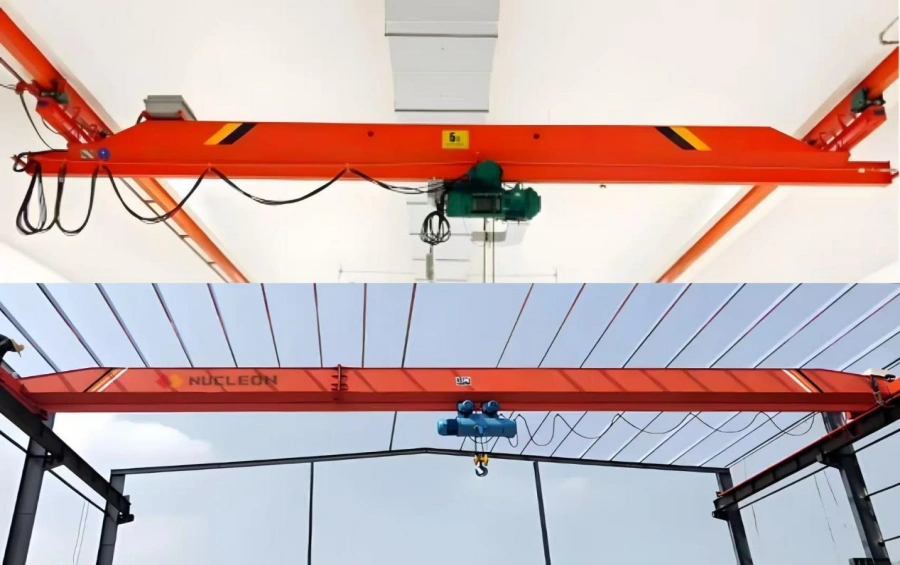
Advanced Lightweight Design: Nucleon cranes feature optimized box-girder structures that reduce self-weight by up to 25% compared to traditional models, lowering wheel pressure and saving building costs.
Premium Components: We utilize high-quality three-in-one drive motors and closed-loop hard-tooth gear reducers, ensuring maintenance-free operation, high precision, and minimal noise.
Intelligent Control: Standard VFD (Variable Frequency Drive) systems provide smooth, stepless speed control, enhancing safety and extending the lifespan of mechanical parts.
Customized Solutions: Whether you need a standard LX model or a customized low-headroom configuration, Nucleon's engineering team can tailor the span, lifting height, and control systems to perfectly match your workshop's unique requirements.
FAQ
Q: Can an electric single-girder suspension crane be installed in a workshop with a low ceiling?
A: Yes. Because the main girder and hoist are suspended beneath the runway beams rather than sitting on top of them, this underhung design significantly reduces the overall height requirement. It is the perfect solution for maximizing lifting height in workshops with low headroom.
Q: Is the suspension crane suitable for heavy-duty manufacturing?
A: Suspension cranes are specifically engineered for light to medium-duty applications, typically handling loads from 0.5 to 10 tons. They are ideal for assembly lines, warehouses, and compact machining shops. For heavy manufacturing exceeding 10 tons, a standard single-girder or double-girder overhead crane would be more appropriate.
Q: Why should I choose Nucleon's suspension crane over traditional models?
A: Nucleon integrates European lightweight design principles, reducing the crane's self-weight by up to 25%. This lowers the wheel pressure and saves your factory's construction costs. Additionally, our cranes feature premium three-in-one drives and standard VFD systems, ensuring smoother, quieter, and more precise material handling.
Contact us
If you need a customized electric single-girder suspension crane solution, please send us your lifting capacity, span, lifting height, and workshop layout constraints. Nucleon's engineering team can help you choose the safest and most suitable model and provide a professional quotation.