
 English
 Español
 Русский
 العربية
 Français
 Deutsch
 Português
 Tiếng Việt
 ไทย
 Bahasa Indonesia
 Türkçe
 Italiano





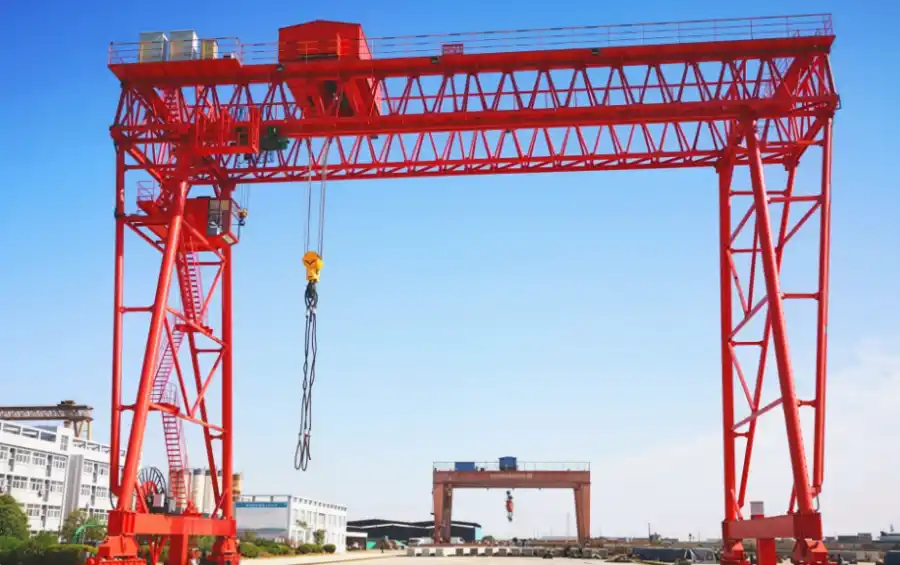
The truss gantry crane is a specialized lifting system defined by its open lattice main beam structure. Unlike box girder cranes that utilize solid steel plating, a truss gantry crane employs a geometric framework of interconnected steel angles or tubular members. This engineering approach prioritizes aerodynamics and structural efficiency, making it the definitive choice for outdoor environments where wind load and transport logistics dictate equipment viability.
For precast yards, bridge construction contractors, and open-air storage facilities, selecting a truss gantry crane is driven by specific environmental and operational constraints. This guide details the mechanical advantages, deployment scenarios, and technical selection criteria unique to lattice-type gantry systems.
Lattice Structure and Wind Permeability
The primary engineering advantage of a truss gantry crane is its aerodynamic profile. In open yards and coastal areas, wind load is frequently the governing factor in structural design.
-Wind Permeability: The open lattice framework allows wind to pass directly through the main beam, drastically reducing the wind pressure coefficient compared to solid box girders. This minimizes the overturning moment and allows the crane to operate safely in higher wind speeds.
-Weight-to-Capacity Ratio: By eliminating non-load-bearing steel plating, truss gantry cranes achieve equivalent lifting capacities with significantly less structural mass. This reduces the required wheel load on the runway rails and permits lighter, more economical foundation systems.
-Geometric Rigidity: The triangular units within the truss provide superior resistance to bending moments and torsional forces during heavy lifts, ensuring structural stability despite the lighter overall weight.
Application-Specific Deployment
Truss gantry cranes excel in environments where box girders face structural or logistical limitations:
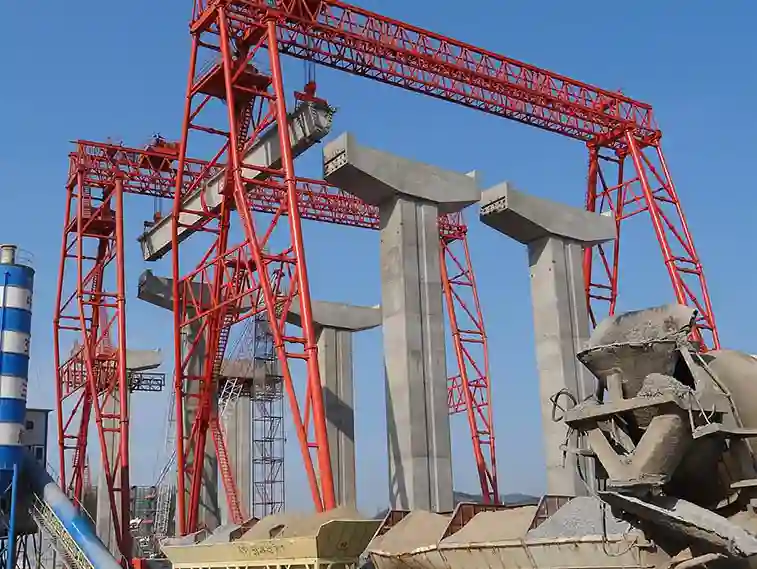
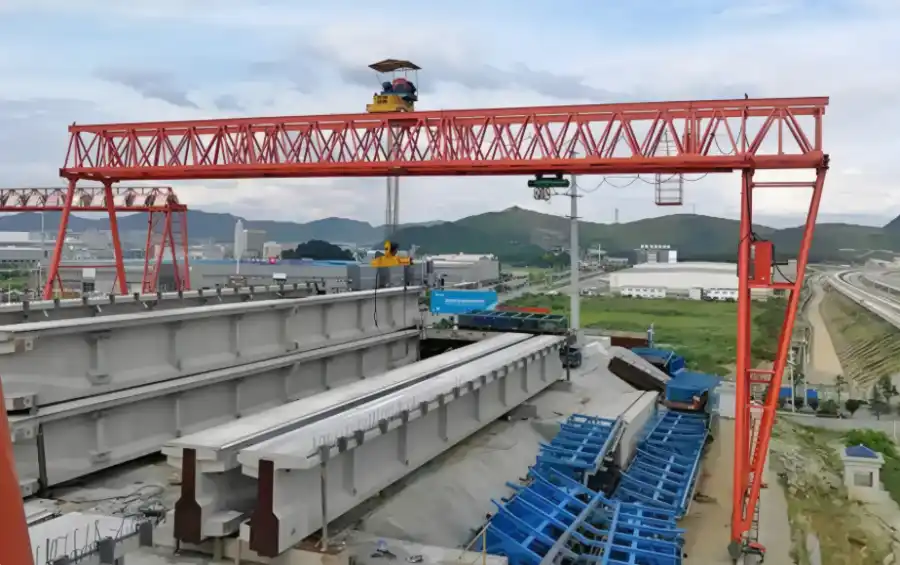
-Precast Concrete & Bridge Beam Yards: The industry standard for highway and railway bridge construction. These cranes lift and transport massive concrete T-beams and box girders. They are frequently paired with movable steel box foundations, allowing the entire crane system to be relocated along the construction alignment as the project progresses.
-Open Storage Yards & Timber Ports: Ideal for lumber yards, scrap metal recycling facilities, and open-air logistics parks where equipment lacks windbreaks and is continuously exposed to severe weather.
-Bridge Launcher Support: Deployed near bridge approaches to lift concrete beams from ground transporters to bridge launchers. They are also specifically engineered for the assembly and disassembly of the launcher cranes themselves.
Modular Assembly and Transport Logistics
For contractors managing temporary or multi-site operations, the truss gantry crane offers distinct logistical advantages over welded box girders.
-Bolted Connections: Truss members are connected via high-strength bolts rather than continuous field welding. This allows the crane to be disassembled into transportable modules that fit standard shipping containers or flatbed trucks, minimizing freight costs.
-Rapid Erection: The modular, bolt-together design significantly reduces on-site assembly time. This makes truss gantries highly suitable for rented facilities or projects requiring frequent relocation.
-Foundation Flexibility: The reduced dead weight allows these cranes to be mounted on movable steel box foundations or portable concrete blocks, eliminating the need for permanent, deeply poured concrete runways.
Technical Selection and Procurement Criteria
When specifying a truss gantry crane, procurement teams must evaluate parameters unique to lattice structures:
-Span and Cantilever: Truss gantry cranes are highly effective for wide spans (often exceeding 30 meters) with cantilever lengths ranging from 5 to 15 meters to maximize yard coverage without requiring additional runway infrastructure.
-Duty Class: Typically rated for A3 to A5 duty cycles. They are engineered for steady, heavy lifting rather than the rapid, continuous cycling seen in manufacturing plants.
-Corrosion Protection: Standard operating temperatures range from -25°C to +50°C. For coastal or highly corrosive environments, specify hot-dip galvanized truss members or specialized marine-grade paint systems to prevent joint degradation.
-Outdoor Safety Systems: Given their exposure, these cranes must be equipped with automatic rail clamps, anemometers (wind speed monitors), and anti-collision systems for multiple cranes operating on the same runway.
Frequently Asked Questions
Q1: When should I specify a truss gantry crane over a box girder gantry crane?
A: Specify a truss gantry crane when the equipment will operate primarily outdoors in high-wind environments, when runway foundation load capacity is limited, or when the crane needs to be frequently disassembled and transported to new sites.
Q2: Are truss gantry cranes suitable for indoor factory use?
A: While technically possible, they are rarely used indoors. The open lattice structure provides no aerodynamic advantage inside a climate-controlled building, and the exposed joints require more frequent inspection and maintenance than a sealed box girder. Box girders are generally preferred for indoor applications.
Q3: How does the lattice structure impact maintenance requirements?
A: Truss cranes have a higher number of structural connection points (bolts and gusset plates) compared to box girders. Maintenance programs must include regular torque checks on structural bolts and thorough visual inspections for fatigue cracks or corrosion at the joints, especially in corrosive outdoor environments.
Q4: Can a truss gantry crane handle heavy precast bridge beams?
A: Yes. Truss gantry cranes are the industry standard for precast beam yards. They are routinely engineered with capacities up to 200 tons or more, specifically configured with dual hoists and specialized spreader beams to safely lift and transport long, heavy concrete bridge girders.