
 English
 Español
 Русский
 العربية
 Français
 Deutsch
 Português
 Tiếng Việt
 ไทย
 Bahasa Indonesia
 Türkçe
 Italiano





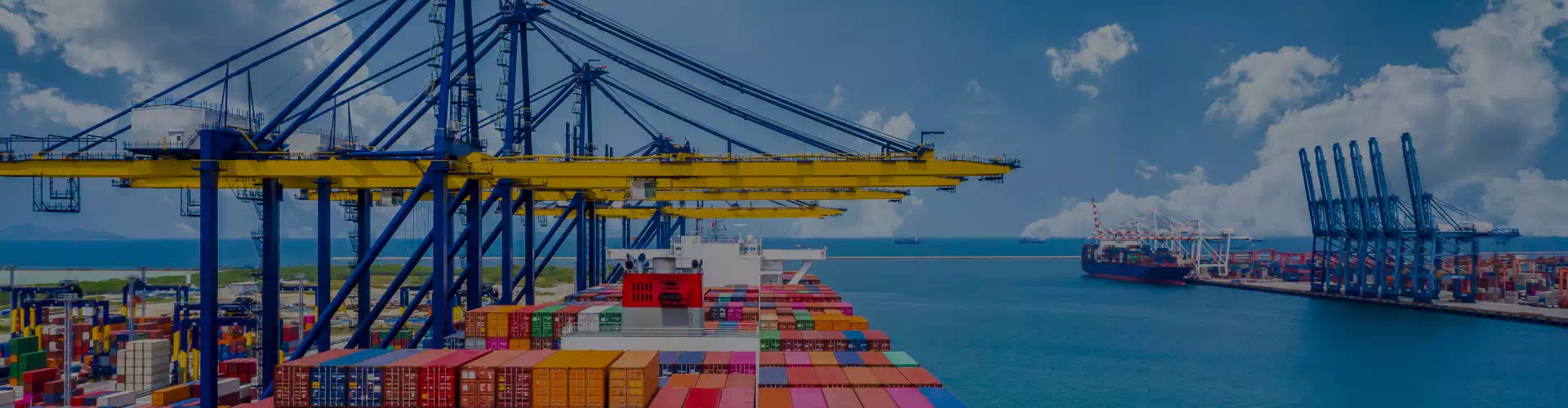
A clamps overhead crane is a specialized material handling system engineered for the secure lifting of heavy steel products without traditional rigging. Unlike standard hook cranes that require slings, chains, or electromagnets, this system integrates mechanical clamping devices directly into the hoist mechanism. This direct-grip approach eliminates the need for manual attachment, significantly reducing cycle times in high-throughput environments like steel mills and service centers.
The defining characteristic of a clamps overhead crane is its reliance on mechanical force—either self-locking gravity or powered actuation—to generate friction and holding power against the load. This makes it distinct from magnetic lifters, which can fail during power outages or struggle with high-alloy steels. For procurement teams and engineers, understanding the specific mechanical configuration of the clamp is critical to matching the crane to the application.
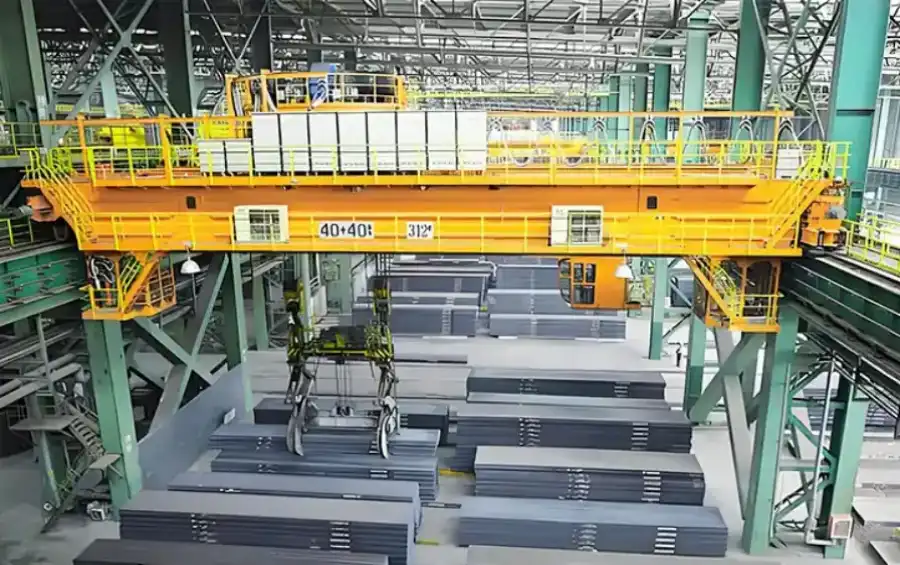
Mechanical Configurations for Specific Loads
The term "clamps overhead crane" covers several distinct mechanical designs. Selecting the wrong type can lead to load slippage or surface damage.
Vertical Slab Clamps
Designed for lifting steel slabs in a vertical orientation, these clamps utilize a cam mechanism. As the load is lifted, the weight of the slab forces the cam to rotate, increasing the jaw pressure against the steel surface. This self-locking feature ensures that the grip tightens as the load increases. They are essential for feeding slabs into reheating furnaces or rolling mills where horizontal space is limited. Key technical considerations include the minimum hardness of the jaw teeth (to prevent wear) and the presence of a safety latch to prevent accidental release when the load is stationary.
Horizontal Coil Grabs
For steel coils, the clamps overhead crane typically employs a C-hook style or a mechanical V-arm grab. Unlike a simple C-hook which relies on the coil's inner diameter (ID), mechanical grabs often use tapered arms that expand inside the ID or friction pads that grip the outer diameter (OD). When specifying this equipment, the "taper angle" of the arms is a critical parameter; it must match the coil ID tolerance to prevent the grab from getting stuck or slipping. Hydraulic variants allow for remote operation, keeping the crane operator at a safe distance from the unstable coil stack.
Sheet and Plate Lifters
For thinner materials, parallel jaw clamps are used. These rely on a screw-spindle or hydraulic mechanism to apply uniform pressure across the sheet surface. Unlike slab clamps, these do not rely on gravity for locking and often require a powered closing mechanism to maintain grip on smooth, painted, or oiled surfaces where friction coefficients are low.
Critical Selection Criteria for Procurement
When sourcing a clamps overhead crane, technical specifications must go beyond basic lifting capacity. The following parameters define operational safety and efficiency:
Load Eccentricity and Center of Gravity: Clamps create an offset load. The crane structure and runway beams must be rated for the dynamic moment created by the clamp's reach, not just the vertical weight. Engineers must calculate the "effective load" including the clamp weight and the eccentric moment arm.
Jaw Material and Hardness: The interface between the clamp and the load is a wear point. For hot slabs (up to 600°C), jaws must be made of heat-resistant alloy steel to prevent annealing and loss of hardness. For cold, finished coils, polyurethane or nylon pads are required to prevent surface marring.
Safety Factors: Mechanical clamps handling overhead loads typically require a minimum design safety factor of 4:1 or 5:1 against yield strength, depending on local regulations (e.g., ASME B30.20 or EN 13155). Verify that the manufacturer provides test certificates for the specific clamp model, not just the crane bridge.
Fail-Safe Mechanisms: In the event of a hydraulic hose burst or power failure, does the clamp hold or drop? Self-locking mechanical cams are inherently fail-safe for vertical lifts. Hydraulic grabs must be equipped with pilot-operated check valves (load-holding valves) directly mounted on the cylinder to prevent uncontrolled lowering.

Integration with Overhead Crane Systems
The clamp is only one component of the system. The overhead crane itself must be adapted to handle the unique duty cycle of clamping operations.
Hoist Class: Clamping operations often involve frequent inching and precise positioning. A standard M3/M4 hoist may overheat. M5 or M6 class hoists with variable frequency drives (VFD) are recommended to provide smooth acceleration and precise speed control during the gripping phase.
Rotation Capability: Many slab and coil applications require the load to be rotated 90 or 180 degrees. This requires a motorized rotator integrated between the hoist hook and the clamp. The rotator must have a mechanical brake to hold position when power is cut.
Anti-Sway Technology: Because clamped loads are rigid and often long (like slabs), pendulum sway can be dangerous during transport.
Advanced clamps overhead cranes often incorporate electronic anti-sway systems that automatically adjust trolley acceleration to cancel out load swing.
Maintenance and Inspection Protocols
Mechanical clamps are high-wear components. A preventive maintenance schedule is mandatory.
Jaw Tooth Inspection: Check for cracking, chipping, or excessive wear. Worn teeth reduce the coefficient of friction and can lead to catastrophic slip.
Pivot Pin Clearance: Measure the clearance in the cam and linkage pins. Excessive play alters the geometry of the locking mechanism, potentially reducing the clamping force below the safe threshold.
Non-Destructive Testing (NDT): Critical load-bearing parts like the shank, body, and pivot pins should undergo magnetic particle or dye penetrant inspection annually to detect subsurface fatigue cracks.
Frequently Asked Questions
Q: Can a clamps overhead crane handle loads with low friction surfaces, such as oiled or galvanized steel?
A: Standard serrated jaws may slip on oiled surfaces. For these applications, specify clamps with specialized friction pads or increased jaw pressure ratios. Alternatively, use vacuum lifters for sensitive, oiled sheets, though these require a constant power source.
Q: What is the difference between a self-locking clamp and a forced-closing clamp?
A: A self-locking clamp (common for vertical slabs) uses the weight of the load to engage the locking cam; it requires no external power to hold the load. A forced-closing clamp (common for horizontal sheets) uses a screw or hydraulic cylinder to close the jaws and relies on continuous force or a mechanical lock to maintain grip. Self-locking is generally safer for vertical lifts due to its passive safety nature.
Q: How do I determine the correct clamp capacity for my overhead crane?
A: Never match the clamp capacity exactly to the crane capacity. You must account for the weight of the clamp itself (which reduces net payload) and any dynamic factors. If lifting a 10-ton slab with a 1-ton clamp, you need an 11-ton minimum lifting system, but the clamp itself should be rated for at least 10 tons with the appropriate safety factor applied to the payload, not the gross weight.
Q: Are clamps overhead cranes suitable for outdoor storage yards?
A: Yes, but environmental protection is critical. Outdoor clamps require IP65-rated electrical components (if motorized/hydraulic) and corrosion-resistant coatings. For purely mechanical manual clamps, stainless steel pins and sealed bearings are necessary to prevent rust seizure, which could prevent the cam from locking properly.