

 English
 Español
 Русский
 العربية
 Français
 Deutsch
 Português
 Tiếng Việt
 ไทย
 Bahasa Indonesia
 Türkçe
 Italiano





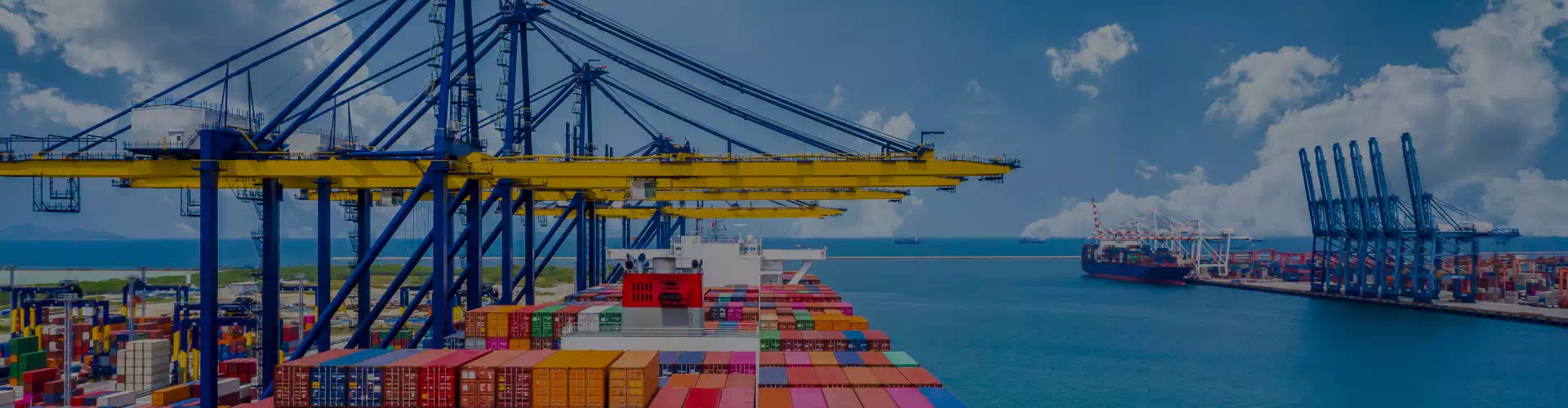
A shipbuilding gantry crane is a highly specialized heavy-lifting system engineered specifically for the assembly and joining of massive ship hull sections. Unlike general-purpose gantry cranes used in ports or warehouses, shipbuilding gantry cranes are defined by their immense lifting capacities (often exceeding 1,000 tons), massive spans (frequently over 100 meters), and the requirement for multi-point synchronous lifting.
For shipyard planners and heavy-lift procurement engineers, selecting a shipbuilding gantry crane requires evaluating complex mechanical configurations designed to handle the unique geometry of ship blocks. This guide details the dual-trolley mechanics, structural engineering, and critical selection criteria specific to shipyard block assembly.
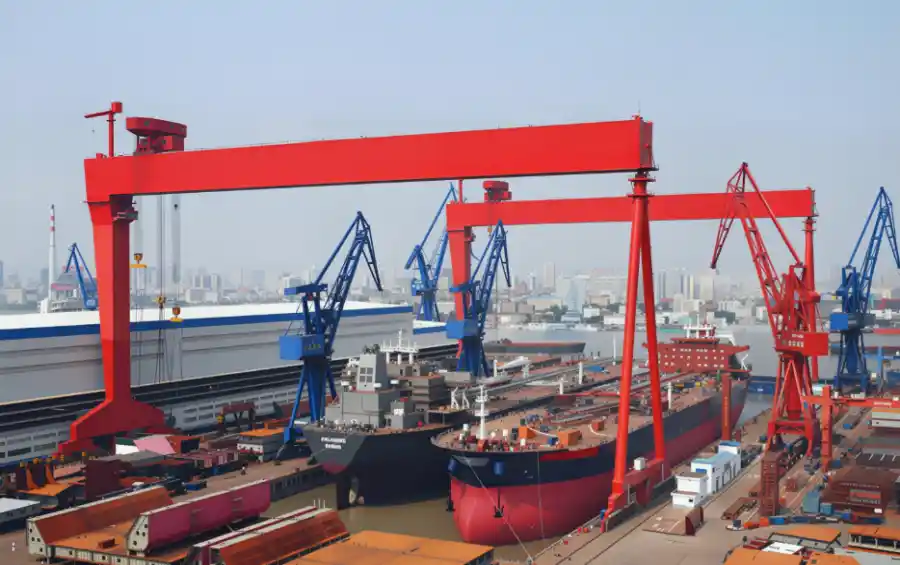
Dual-Trolley Configurations and Block Lifting Mechanics
The core operational requirement of a shipbuilding gantry crane is the ability to lift, transport, and precisely align massive, asymmetrical steel sections. This is achieved through specialized trolley configurations:
Upper and Lower Trolley System: Heavy-duty shipbuilding cranes typically feature two independent trolleys operating on the same main beam. The upper trolley runs on the top rail of the main girder, while the lower trolley operates on the bottom rail. This dual-level design allows for simultaneous multi-point lifting, enabling the crane to pick up a block from multiple angles and maintain balance during transit.
-Synchronous Multi-Hook Lifting: Ship blocks are rarely uniform in weight distribution. The crane’s electrical control system must provide precise synchronization between the upper and lower trolleys, as well as between multiple hooks on a single trolley. Modern systems utilize PLC-controlled variable frequency drives (VFDs) to ensure millimeter-level positioning accuracy during block mating.
-In-Air Segment Flipping: A critical function of shipbuilding gantry cranes is the ability to rotate large hull sections in mid-air. By utilizing the upper and lower trolleys in coordinated differential movement, operators can safely flip segments to access welding seams or prepare for mating, eliminating the need for secondary ground-based flipping equipment.
Structural Engineering: Rigid-Flexible Leg Design
Shipbuilding gantry cranes operate on a massive scale, often spanning over 100 meters. To accommodate thermal expansion and uneven rail settlement across this vast distance, the structural support system requires specialized engineering:
Rigid and Flexible Legs: One side of the crane is supported by a rigid leg (fixed connection to the main beam), while the opposite side utilizes a flexible leg (hinged connection). This design allows the crane to safely absorb lateral forces and thermal elongation of the main girder without inducing destructive stress into the structure.
-Single vs. Double Girder: For spans exceeding 80 meters and capacities above 600 tons, a double-girder box design is typically mandated to provide the necessary torsional rigidity for dual-trolley operations. Single-girder designs are generally reserved for lighter-duty block handling or smaller regional shipyards.
-Wind Resistance and Anchoring: Due to their massive surface area and outdoor operation, these cranes require robust wind protection systems. This includes automatic rail clamps, anchor pins, and wind-speed monitoring systems that automatically halt operations and secure the crane when wind loads exceed safe thresholds.
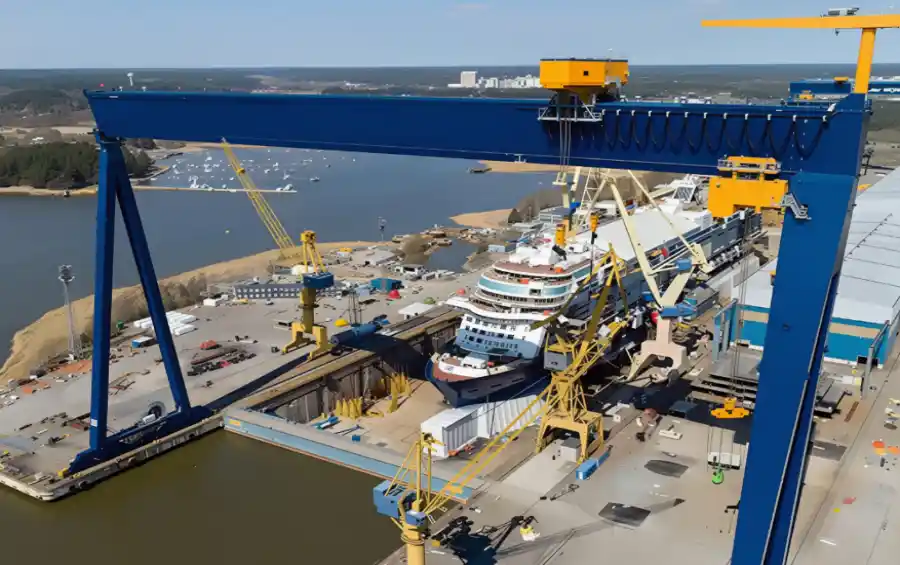
Technical Selection and Procurement Criteria
When specifying a shipbuilding gantry crane, procurement teams must define parameters specific to shipyard block assembly:
-Capacity and Span: Capacities range from 100 tons for regional yards to over 1,500 tons for mega-vessels. Spans typically range from 40 meters to over 200 meters, dictated by the width of the dry dock or assembly slipway.
-Lifting Height and Under-Hook Clearance: The crane must provide sufficient clearance not only to lift the block but to accommodate the height of the assembly jigs, welding platforms, and the dock structure itself. Under-hook heights of 60 to 100 meters are common for modern mega-shipyards.
-Working Duty Class: Shipbuilding operations involve frequent, precise positioning rather than continuous high-speed cycling. Duty classes are typically rated FEM A4 or A5, optimized for heavy, intermittent lifts with high precision requirements.
-Intelligent Control Systems: Given the critical nature of block mating, modern shipbuilding gantry cranes require integrated safety and monitoring systems. This includes anti-collision systems for crane clusters operating in the same yard, load moment indicators, and automated alignment guides.
Installation and Site Preparation
The installation of a shipbuilding gantry crane is a major civil engineering project that requires meticulous planning.
-Foundation and Rail Alignment: The crane’s massive wheel loads require deep pile foundations. Rail alignment tolerances are exceptionally strict; even minor deviations in rail level or gauge can cause severe wheel wear and structural fatigue in the rigid-flexible leg system.
-Erection Methodology: Due to the extreme height and span, shipbuilding gantry cranes are typically assembled using a strand-jack lifting system or by utilizing a smaller auxiliary gantry crane to erect the main girders in sections.
-Load Testing: Full load testing must simulate the most severe lifting scenarios, including asymmetric loading and in-air flipping operations, to validate the synchronization of the dual-trolley system.
Frequently Asked Questions
Q1: What is the difference between a shipbuilding gantry crane and a standard gantry crane?
A: A shipbuilding gantry crane is specifically engineered for block assembly, featuring dual-trolley systems for multi-point lifting, in-air segment flipping capabilities, and rigid-flexible leg designs for massive spans. Standard gantry cranes typically feature a single trolley and are designed for point-load lifting in less demanding environments.
Q2: Why do shipbuilding gantry cranes use a rigid-flexible leg design?
A: Shipbuilding cranes often have spans exceeding 100 meters. Over such distances, thermal expansion and uneven ground settlement can induce massive structural stress. The rigid-flexible leg design allows the crane to safely accommodate these movements through the hinged flexible leg, preventing structural failure.
Q3: Can a shipbuilding gantry crane perform block flipping operations?
A: Yes. This is one of their primary functions. By utilizing the upper and lower trolleys in a coordinated differential movement, the crane can safely rotate large hull sections in mid-air, allowing access to all welding seams without requiring secondary ground equipment.
Q4: What level of positioning accuracy is required for shipbuilding gantry cranes?
A: Block mating requires extreme precision. Modern shipbuilding gantry cranes utilize PLC-controlled VFDs to achieve millimeter-level positioning accuracy during the final mating phase, ensuring that massive steel sections align perfectly without requiring manual forcing or rework.